
Last updated November 25, 2026
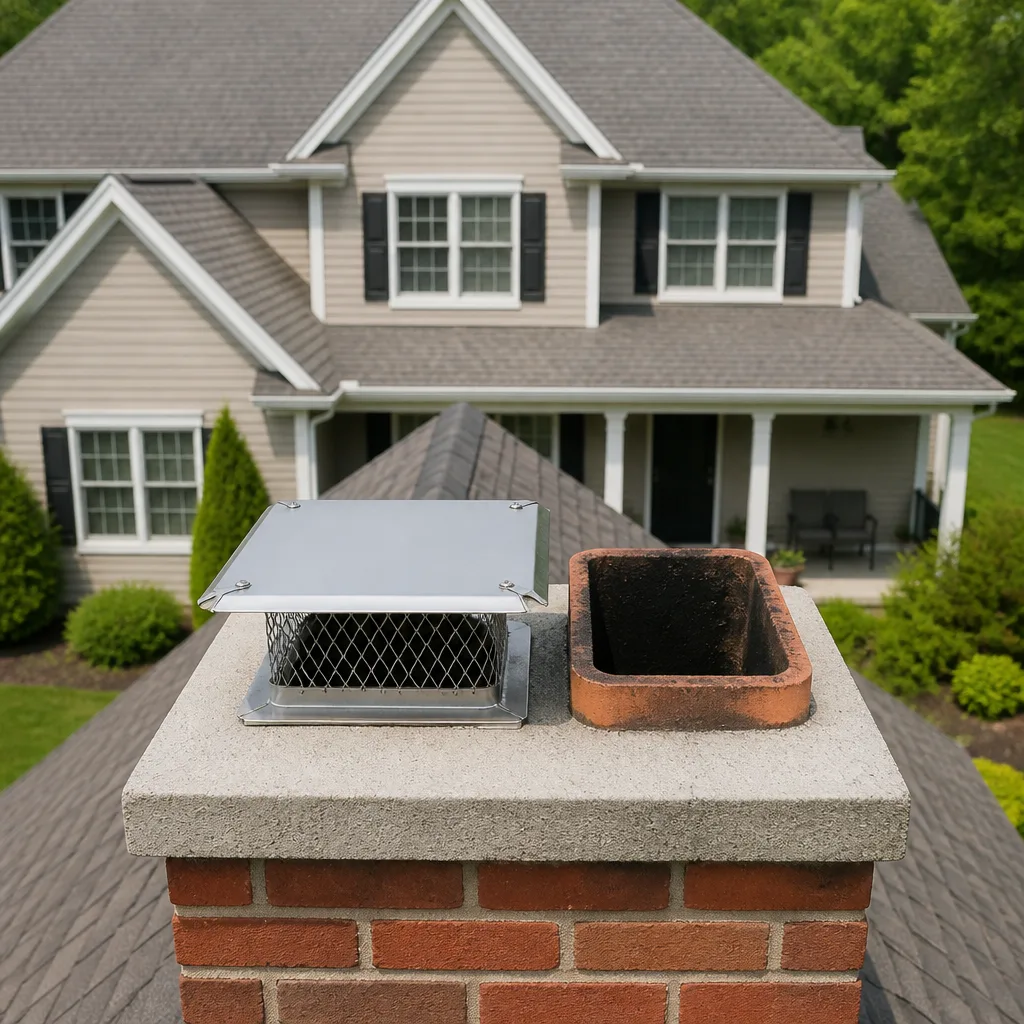 Sweep & inspection
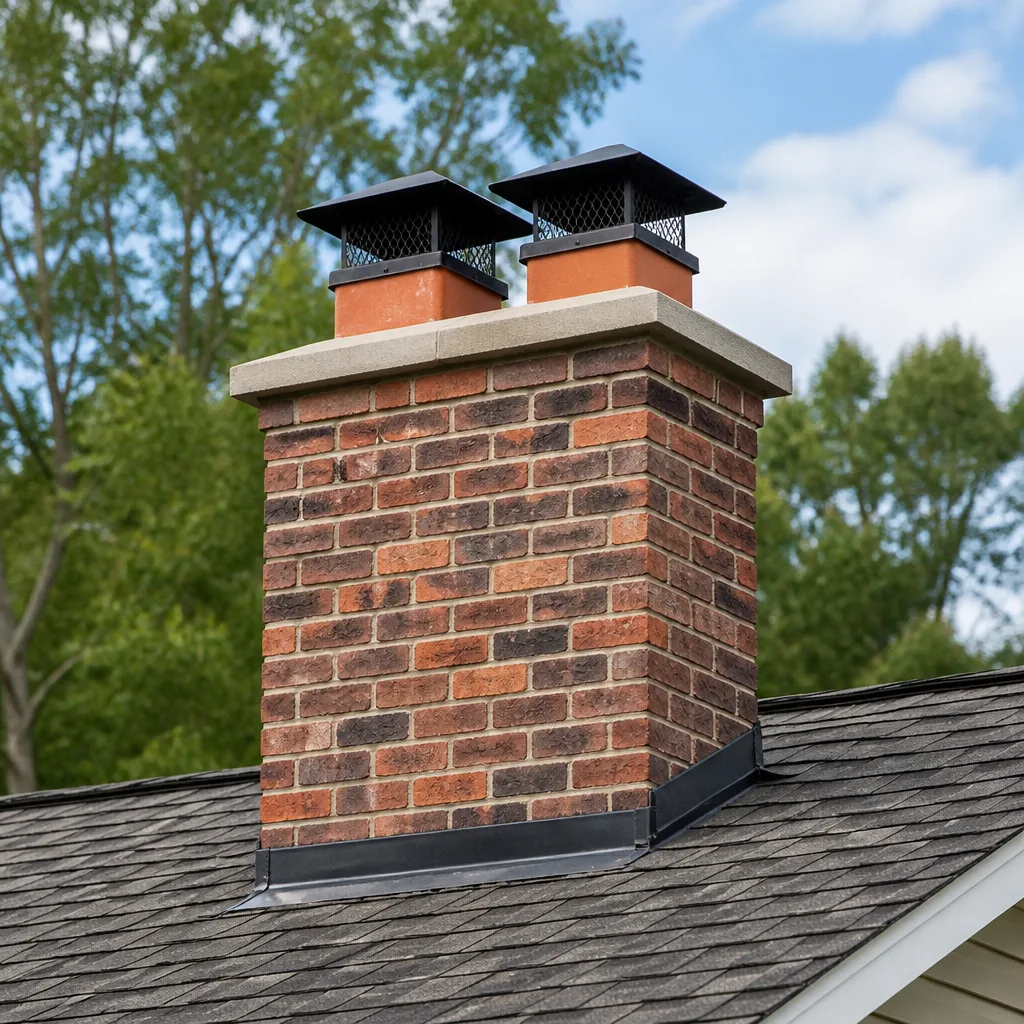 Caps & crowns
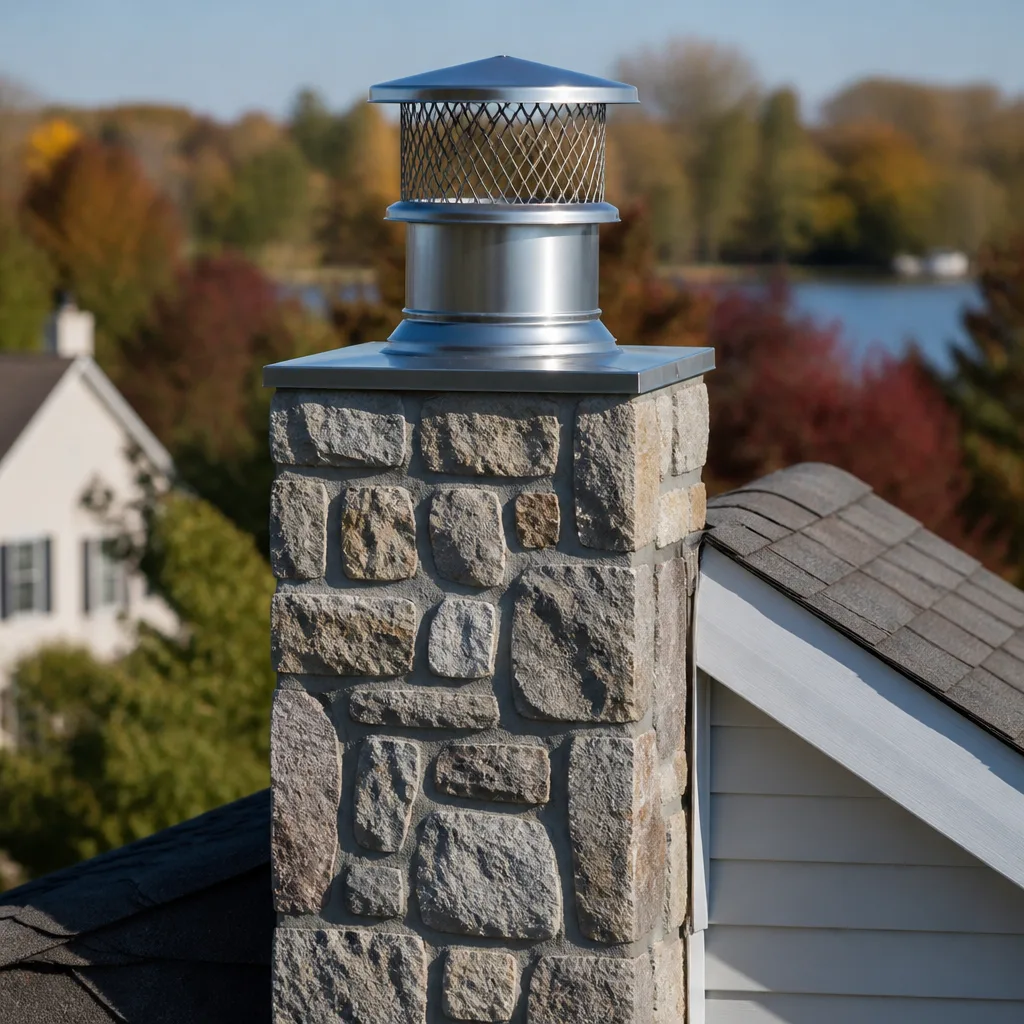 Flue relining
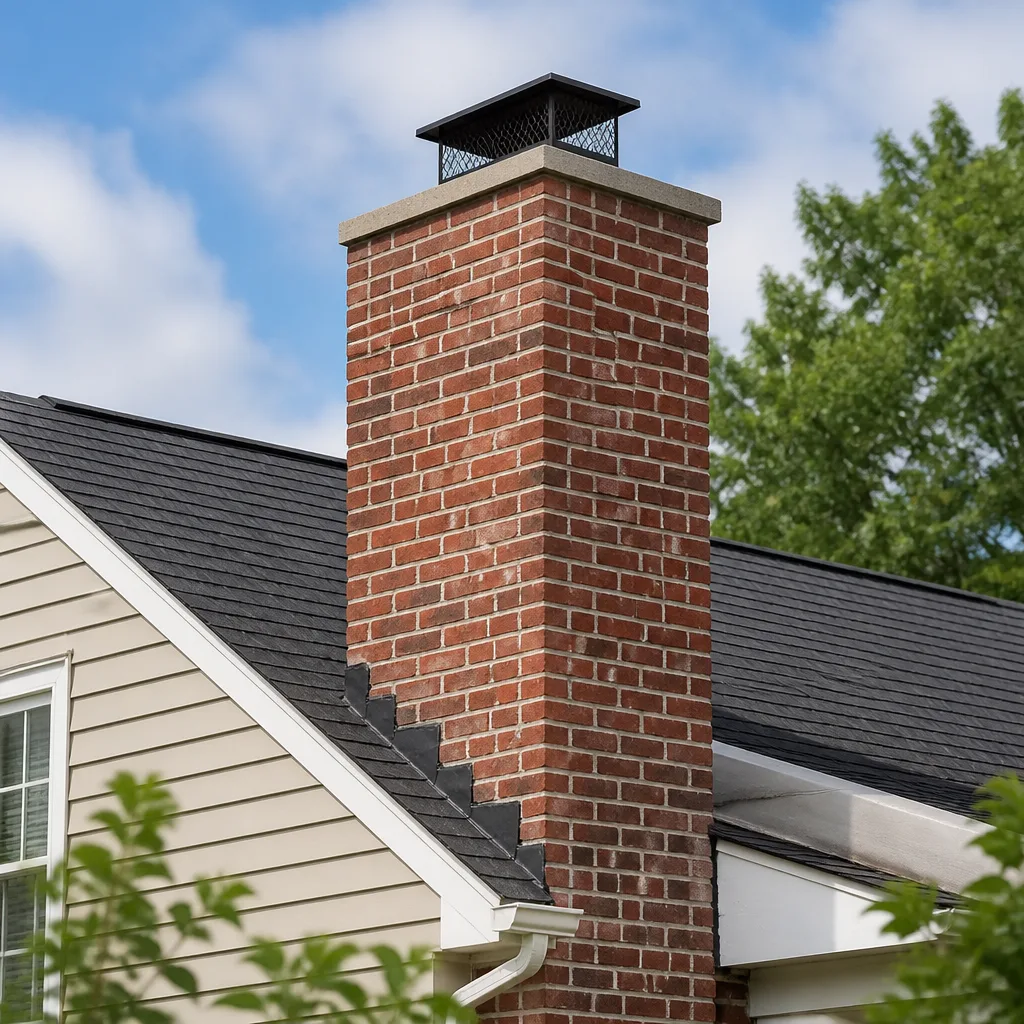 Masonry repair
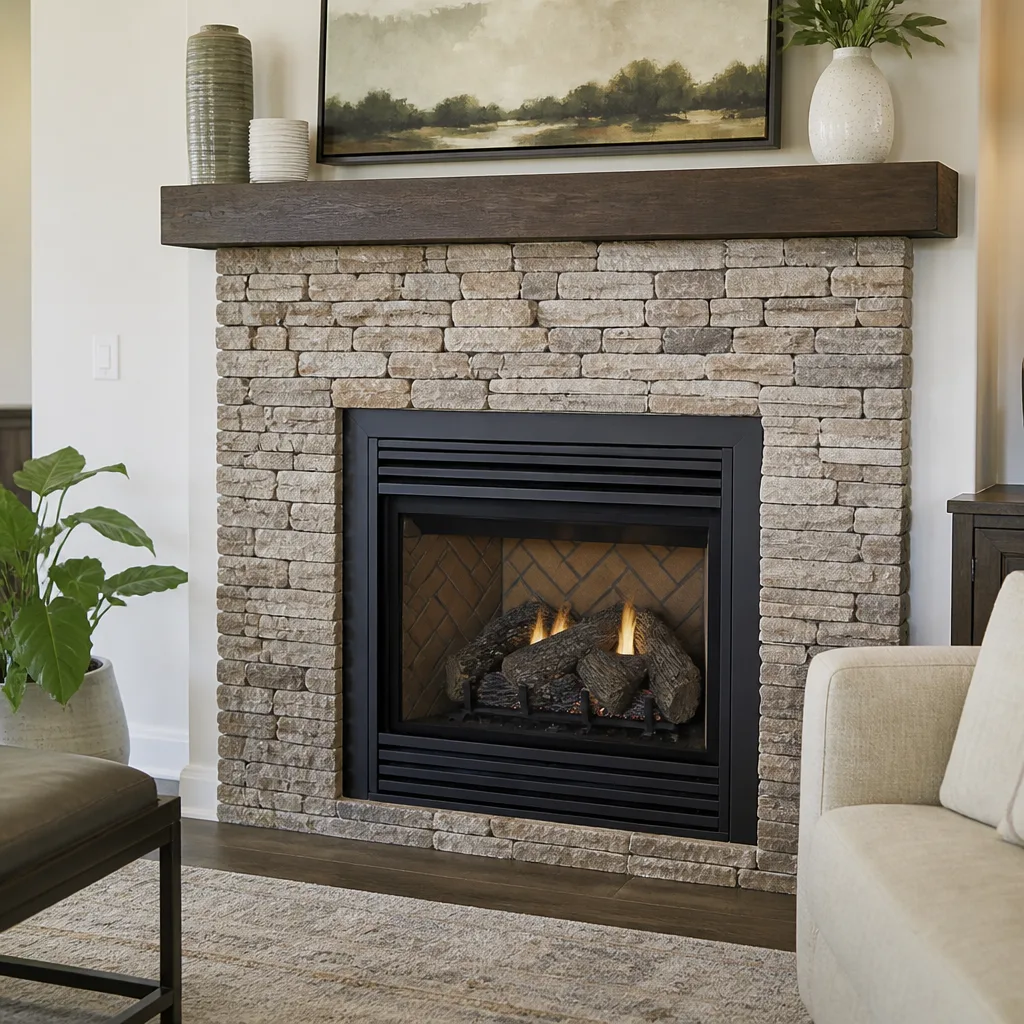 Gas fireplace service
Level 1 sweep and inspection to the NFPA 211 annual standard - flue, crown, cap, and flashing checked and photographed
Chimney sweep logs do not sweep chimneys. They loosen some creosote - which then falls where a brush and vacuum still have to collect it.
Choosing the Right Chimney Cleaning Brand: A Buyer’s Guide for Charlestown
Applying a standard creosote remover to a Stage 3 glazed deposit doesn’t clean it. It softens the shiny outer layer and can seal in the porous underlayer, which makes the rotary cleaning that follows harder than it needed to be. That’s the counterintuitive truth about chimney products: the label on the bottle matters less than whether the chemistry matches the stage of the deposit and the material of the flue. Brand selection in chimney care isn’t a consumer preference question. It’s a performance specification question. In this guide we’ll walk through how to match product category to job, why stainless liner grade matters, what HeatShield can and cannot do compared to a full reline, and how to read a contractor’s answer when you ask what they actually use in Charlestown.
Quick Answer
The right chimney cleaning brand depends on three variables: the stage of creosote you’re dealing with, the material of the flue, and whether the job is treatment, maintenance, or structural repair. ACS (Anti-Creo-Soot) is a treatment product for active creosote; Rutland covers routine maintenance; HeatShield is a ceramic resurfacing system for rehabilitating deteriorated liners without a full tear-out. A contractor who can name the specific product for each job, and explain why, is the one worth hiring in Charlestown.
Styles & brands we work with
- Sweep & inspection
- Caps & crowns
- Flue relining
- Masonry repair
- Gas fireplace service
Table of Contents
- How Do You Match a Chimney Product to the Actual Job?
- Why Does Creosote Stage Change Which Product Works?
- Why Does Stainless Liner Grade Matter in Charlestown?
- HeatShield vs. Full Stainless Reline: When Is Each Appropriate?
- What Does “Professional-Grade” Actually Mean on a Label?
- What Should You Ask a Contractor About Products?
- How Do You Interpret a Contractor’s Answer?
- Common Mistakes to Avoid
How Do You Match a Chimney Product to the Actual Job?
Chimney products fall into three functional categories, and mixing them up is the most common reason a cleaning underperforms. The first category is treatment: chemistry that changes the physical state of creosote so it can be removed. The second is maintenance: chemistry that slows new deposits from forming between sweeps. The third is structural: materials that rebuild or resurface the flue itself. A product engineered for one job will not work for another, no matter how it’s marketed.
Here’s how the categories break down in practice:
- Treatment (ACS / Anti-Creo-Soot): A catalytic treatment applied to the fire to convert glazed creosote into a brittle, brushable form over multiple burns. It doesn’t remove creosote on its own; it changes its state so a rotary sweep can take it off. It is not a cleaner and not a cosmetic product.
- Maintenance (Rutland and similar): Routine chimney and stove maintenance products that help keep new deposits in check between scheduled sweeps. These are the everyday chemistry, not the heavy artillery.
- Structural (HeatShield, DuraFlex, Gelco, Olympia Chimney, Famco, Copperfield): Systems that resurface, reline, cap, or rebuild the flue. HeatShield is a ceramic resurfacing system for deteriorated clay liners. DuraFlex is a flexible stainless liner system for corroded, offset, or undersized flues. Gelco and Famco cover cap, crown, and ventilation components. These are installed, not applied.
In a Charlestown home, the match typically depends on what a camera inspection shows. A flue with heavy glazed creosote needs treatment plus a rotary sweep. A flue with a cracked clay liner needs HeatShield. A flue that’s undersized or has lost its liner entirely needs a stainless system. The product follows the diagnosis, not the other way around. That’s why we never quote a product before we’ve seen the flue.
Why Does Creosote Stage Change Which Product Works?
Creosote doesn’t form in one stage. It progresses through three, and each stage responds to different chemistry. Applying the wrong product to the wrong stage is how homeowners end up paying for a sweep twice.
- Stage 1 – Soot and light flake: A dusty, flaky deposit that brushes off easily. Standard sweep brushes handle this. No treatment product needed beyond routine maintenance.
- Stage 2 – Crusty deposit: A harder, sometimes shiny crust that needs rotary brushing and sometimes a chemical treatment to break it down before removal. This is where maintenance chemistry earns its keep and where treatment products start to become necessary.
- Stage 3 – Glazed creosote: A dense, tar-like, glassy layer bonded to the flue wall. It’s flammable at high temperatures. A standard brush skates over it. Applying a general remover to Stage 3 doesn’t clean it; it softens the outer surface and can seal in the porous layer beneath, making the eventual rotary work harder and increasing fire risk in the meantime. Stage 3 requires a catalytic treatment across multiple burns followed by a rotary cleaning, done by a technician, after a camera inspection confirms the flue’s condition.
In Charlestown’s older housing stock, wood-burning fireplaces with restricted flue draft are common, and restricted draft is exactly what accelerates creosote buildup toward Stage 3. That’s not a scare tactic; it’s physics. Restricted draft means cooler flue gases, which means more condensation, which means faster deposit formation. If your fire smokes back or the house smells like smoke after a burn, that’s a sign the flue may be running cool and depositing faster than normal.
Why Does Stainless Liner Grade Matter in Charlestown?
When a flue needs relining, the grade of stainless steel in the liner determines how long it lasts. Two grades dominate residential chimney work: 304 stainless and 316L stainless. They are not interchangeable, and the difference isn’t cosmetic. 304 is a general-purpose stainless that holds up well against wood smoke and general flue conditions. 316L adds molybdenum to the alloy, which improves resistance to chloride attack and to the corrosive byproducts of certain fuels and conditions. 316L is the grade specified for wood, oil, and coal appliances where corrosion risk is higher, and for flues that see moisture.
How do you verify what’s actually being installed? Ask to see the liner labeling before installation and after. A reputable contractor will show you the grade stamp on the liner, the UL listing on the system, and the warranty documentation. DuraFlex liner systems, for example, are stamped with their grade, and the installation report should name it. If a contractor can’t tell you 304 vs. 316L without looking at the box, that’s a signal.
The specific conditions that push toward 316L in Charlestown homes include:
- Flues serving appliances that produce moist, acidic exhaust (oil, coal, or wet wood)
- Chimneys with a history of moisture intrusion or a failing crown
- Flues that have already corroded once
- Any installation where the manufacturer’s spec calls for 316L for the appliance type
The grade question also ties directly to cap and crown work. A tight chimney cap & crown keeps water out of the flue, and water intrusion is the single biggest accelerator of liner corrosion. If your crown is cracked and the cap is missing, even a good liner will fail early. Fix the water path before you spend on stainless.
HeatShield vs. Full Stainless Reline: When Is Each Appropriate?
This is the question that separates a specialist from a generalist. HeatShield is a ceramic resurfacing system for deteriorated clay flue liners. It’s applied as a coating that bonds to the existing clay and rebuilds the interior surface without a tear-out. A full stainless reline installs a new stainless pipe inside or alongside the existing flue. Both restore a failed liner, but they solve different structural problems.
HeatShield is appropriate when: the clay liner is still structurally sound but has cracks, spalling, or gaps at the joints; the flue is the correct size for the appliance; and the chimney doesn’t need a new liner because of a size change or a material change. HeatShield resurfacing restores the liner’s integrity and keeps the existing flue geometry.
A full stainless reline is appropriate when: the clay liner is missing, collapsed, or too far gone to resurface; the flue is undersized for the appliance (common when a wood stove replaces an open fireplace); the flue has offsets that need a flexible liner; or the appliance requires a specific liner grade or diameter that the existing clay can’t provide. DuraFlex flexible liner systems handle offset, corroded, and undersized flues that resurfacing can’t fix.
What each cannot do: HeatShield cannot resize a flue, cannot replace a missing liner, and cannot correct an undersized flue for a new appliance. A stainless reline cannot be done without addressing the flue’s existing water path first; if the crown is failing, the new liner will corrode from the outside in. Neither product substitutes for a proper inspection.
In our experience, the choice between the two usually comes down to a single question after the camera goes in: is the liner still structurally there, or is it gone?
What Does “Professional-Grade” Actually Mean on a Label?
“Professional-grade” is not a regulated term. Any manufacturer can print it on a bottle. What it actually signals is that the product is sold through trade channels, meets the specification for a defined application, and is backed by documentation a contractor can hand you: a technical data sheet, a UL listing where applicable, and an installation or application spec. Consumer-grade equivalents sold in hardware stores are often nearby formulas diluted, repackaged, or reformulated for retail price points, and they typically lack the documentation a professional job depends on.
Here’s how to tell the difference without reading a chemistry textbook:
- Trade-source: The product is sold to contractors through professional suppliers, not only on a retail shelf. DuraFlex, HeatShield, Gelco, Olympia Chimney, Famco, and Copperfield are professional-trade brands, and they’re specified by name on real jobs, not marketed as consumer DIY products.
- Documented application: A professional product comes with a spec sheet that names the substrates it’s rated for, the temperature range, and the cure or application method. If the contractor can’t show you a spec sheet, the product isn’t professional-grade in any meaningful way.
- System-level warranty: Professional installations carry warranties from the manufacturer that depend on proper application. A warranty that names a specific product and installation method is a signal. A generic “we guarantee our work” line is not.
The distinction matters for chimney sweep results. A sweep done with the right rotary tool and the right post-sweep treatment on a Stage 2 deposit will leave a smooth flue wall. A sweep done with a consumer brush and a generic spray will leave a roughened surface that deposits cling to faster. Same labor hours, very different outcome. When we schedule a chimney sweep, the products are part of the plan, not an afterthought.
What Should You Ask a Contractor About Products?
The best way to gauge a contractor’s technical depth is to ask specific product questions and listen to how they answer. Vague answers to specific questions usually mean the contractor hasn’t specified products before. That’s not necessarily dishonest; it just means you’re talking to a generalist. Ask these, in this order:
- “Which liner grade do you install, and why?” A specialist will name 304 or 316L and explain the appliance and moisture rationale. A contractor who says “stainless is stainless” is guessing.
- “What do you use for Stage 3 glazed creosote, and how many burns does it take?” A specialist will name a catalytic treatment and describe a multi-burn protocol. A generalist will say “we brush it.”
- “When would you specify HeatShield instead of a full reline?” A specialist will describe the structural distinction between resurfacing a sound-but-cracked clay liner and replacing a failed or undersized one. A generalist will say “we’d have to look.”
- “What brands do you install for caps and crowns?” A specialist will name trade brands like Gelco or Famco and explain the fit. A generalist will say “we use a good one.”
- “Will you show me the camera footage and the product labels before you install?” A specialist will say yes without hesitation. This one question screens out most of the rest.
The most useful answer to any of these is a specific one that includes a reason. “We use 316L for wood appliances in this climate because of moisture and creosote acidity” tells you the contractor has specified liners before. “We use the best one” tells you nothing.
How Do You Interpret a Contractor’s Answer?
Contractor answers fall on a spectrum, and the middle of the spectrum is where most hiring decisions go wrong. Here’s how to read what you hear:
- Names a product and explains the application: This is a specialist. They’ve installed the product and know its limits. Book the inspection.
- Names a product but can’t explain why: This is a parts-changer. They’ll install whatever they were trained on, sometimes correctly. Ask for the spec sheet and the warranty terms before you commit.
- Names a category but not a product: (“We use stainless liners” or “we use a treatment for glazed creosote”) This contractor may be familiar with the trade but not with specific product specifications. Ask follow-up questions about grade and application method before deciding.
- Names nothing and recommends a full reline on the first visit: Slow down. Get a camera inspection and a second opinion. A full reline should be justified by a visible structural failure, not by a sales pitch.
One more test: ask the contractor what they’d do if the inspection showed a Stage 2 deposit and a sound clay liner. A specialist will say “sweep and treat, re-inspect in a year or two.” A reline-first contractor will say “reline now.” The answer tells you whether the recommendation is driven by the flue or by the invoice.
This same reading applies whether the job is a cleaning, a cap, a fireplace rebuild, or a full liner. When you call us for fireplace repair, you’ll get the diagnosis and the quote together, because we don’t refer the repair out.
Common Mistakes to Avoid
- Buying a consumer creosote remover for a Stage 3 deposit. It softens the outer layer and can seal in the porous underlayer, making the eventual rotary cleaning harder. Stage 3 needs a catalytic treatment and a technician, not a bottle from the hardware store.
- Assuming “stainless” means the same thing across grades. 304 and 316L are not interchangeable, and a contractor who can’t tell you which one they’re installing is telling you something about their specification process. Ask before the liner goes in, not after.
- Replacing a liner without fixing the crown and cap first. Water intrusion is the leading cause of liner corrosion. A new liner under a cracked crown will fail early, and the warranty may not cover water damage.
- Accepting a full reline quote without seeing the camera footage. In Charlestown’s older homes, sound clay liners with minor cracks are common, and many of those are HeatShield candidates rather than reline candidates. The footage should tell you which.
- Hiring a generalist for a repair job because they were already there for the sweep. Sweeping and relining are different trades. A handyman with a brush is not a liner installer, and the products they specify will show it.
- Ignoring the appliance when specifying the liner. A wood stove replacing an open fireplace almost always needs a smaller, correctly sized flue. Installing a stainless liner at the wrong diameter is a fire risk and a wasted liner.
- Not asking for the product label and spec sheet. Professional-grade products come with documentation. If a contractor can’t produce it, the label was a marketing claim and nothing more.
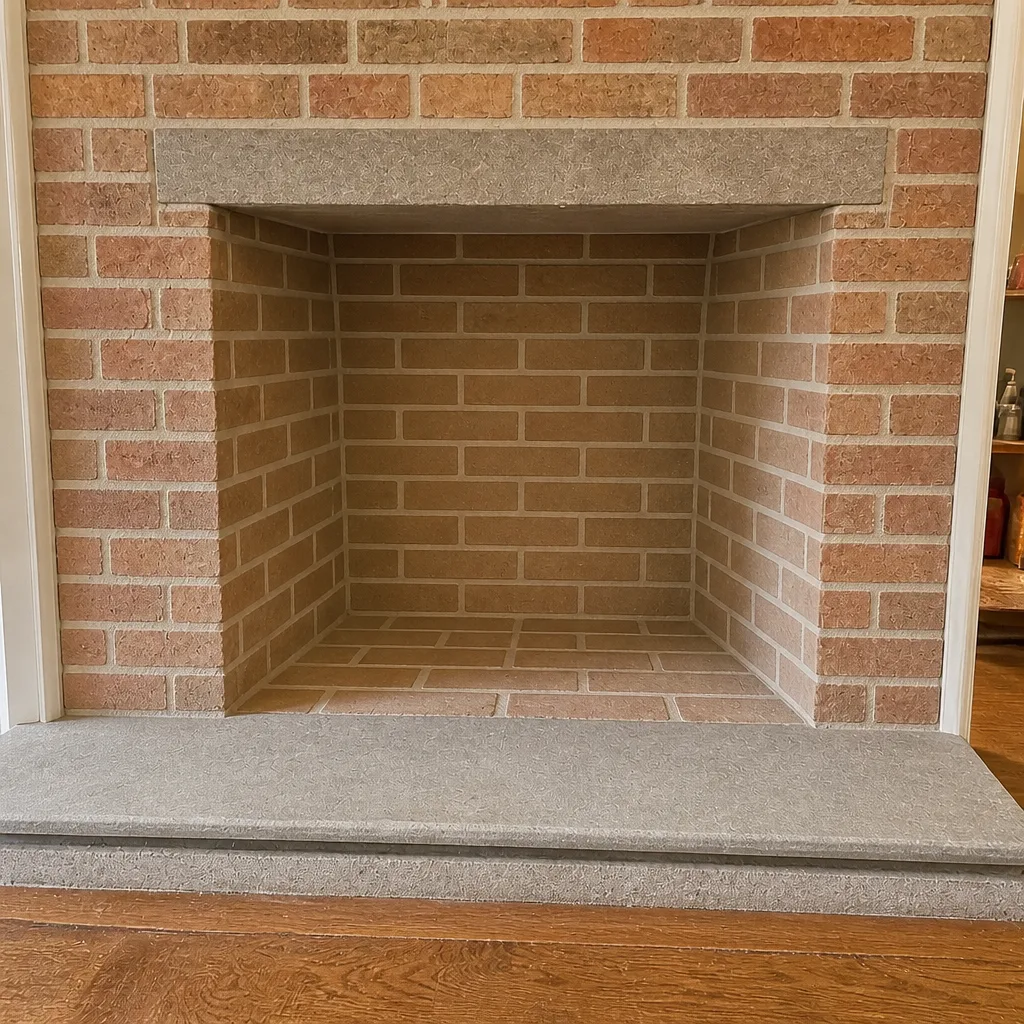
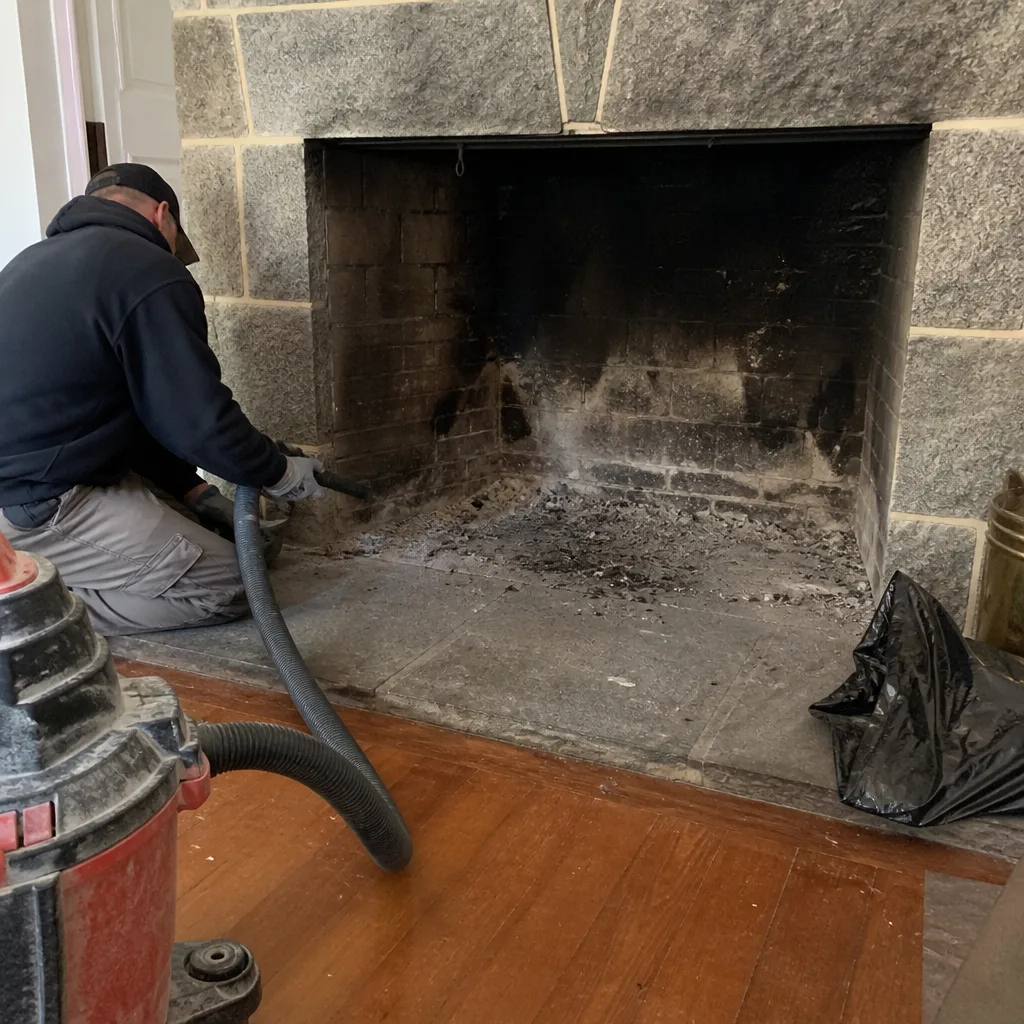
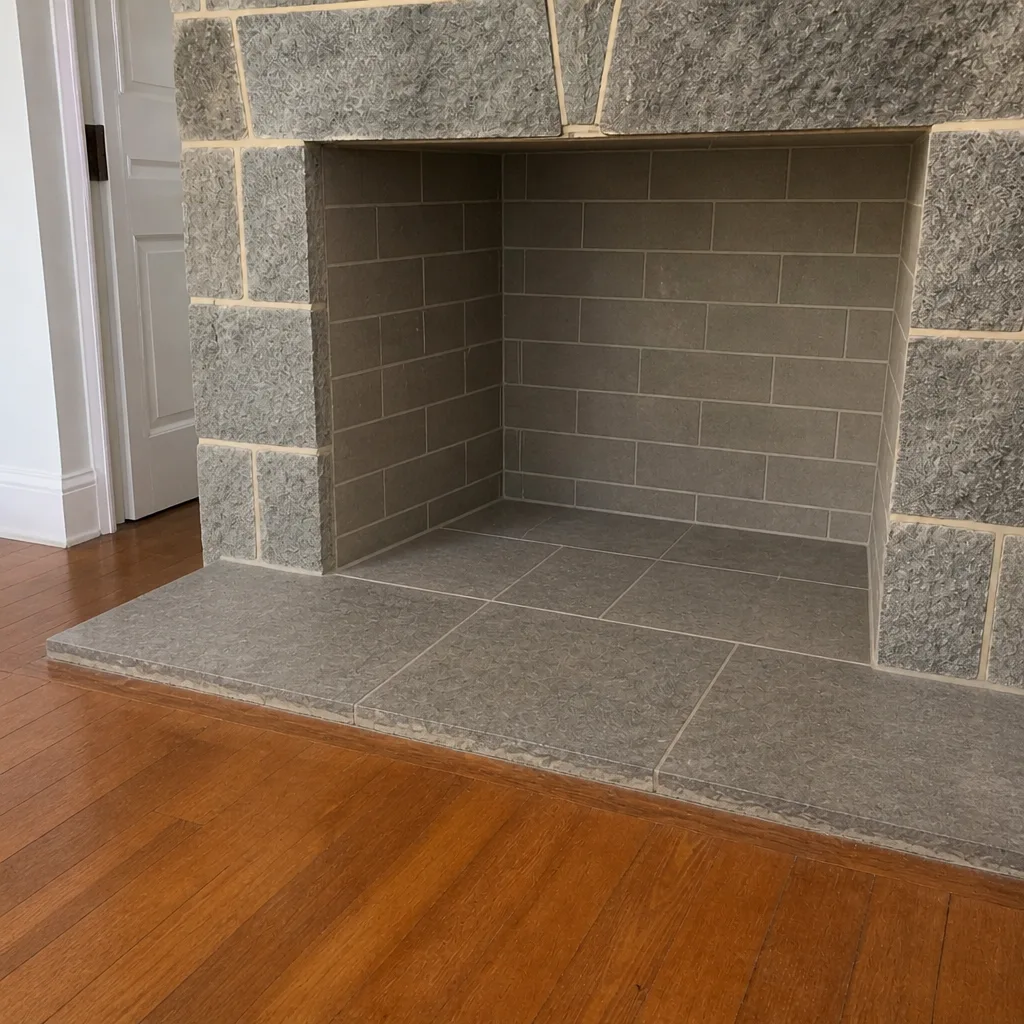
See the difference
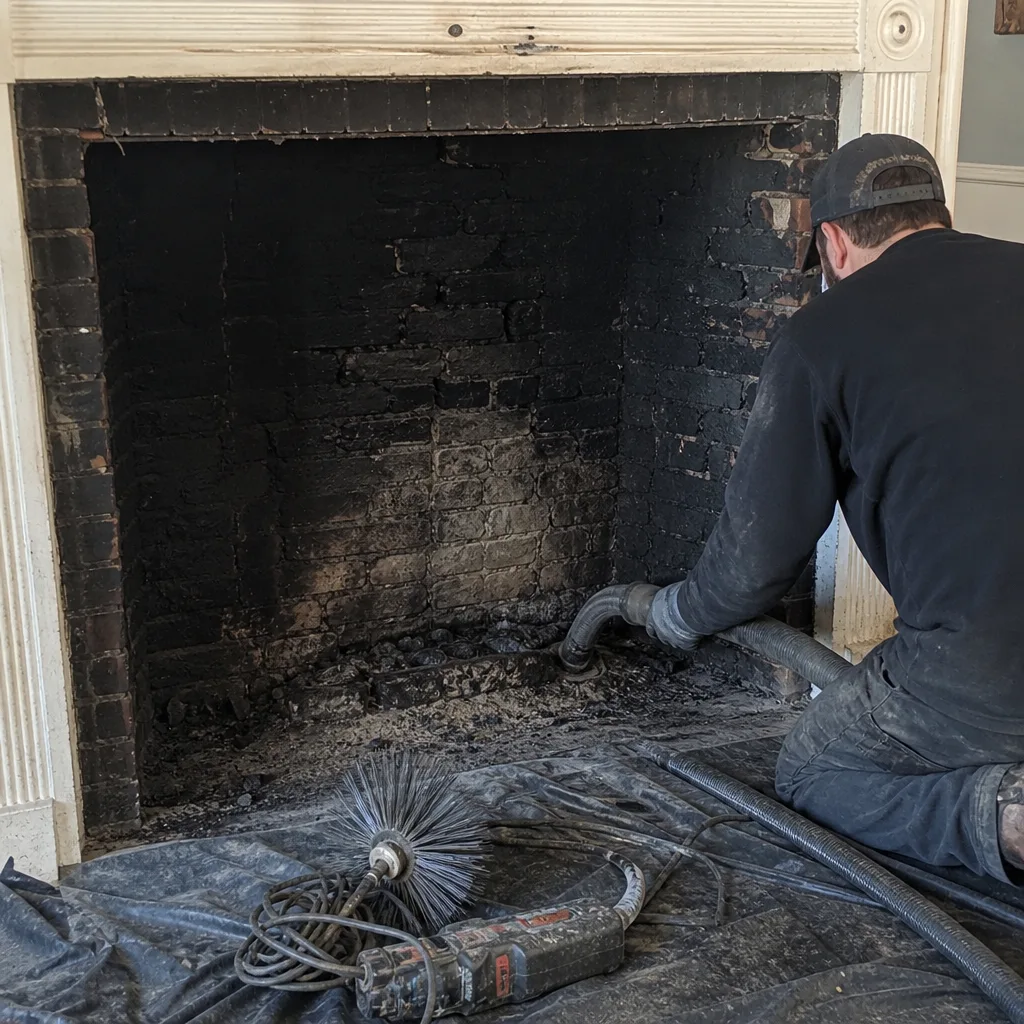 Before
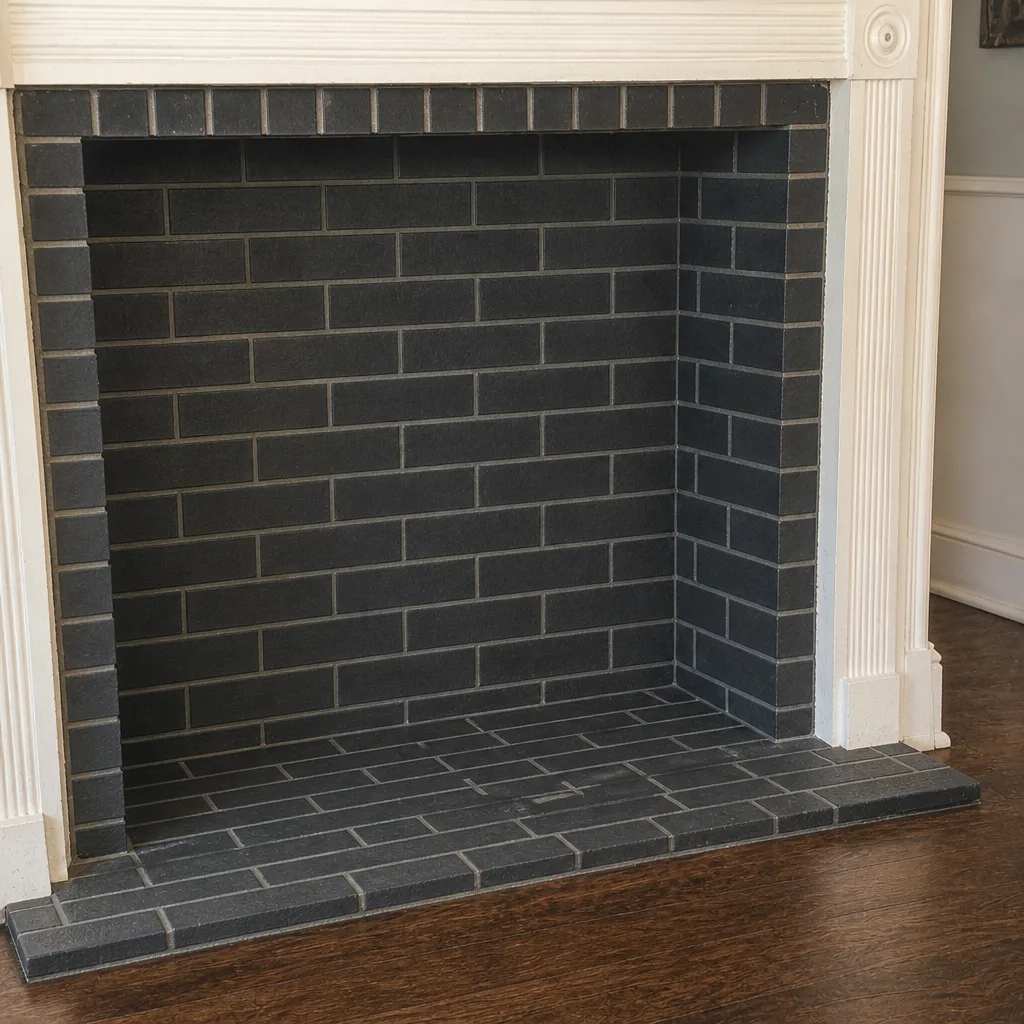 After
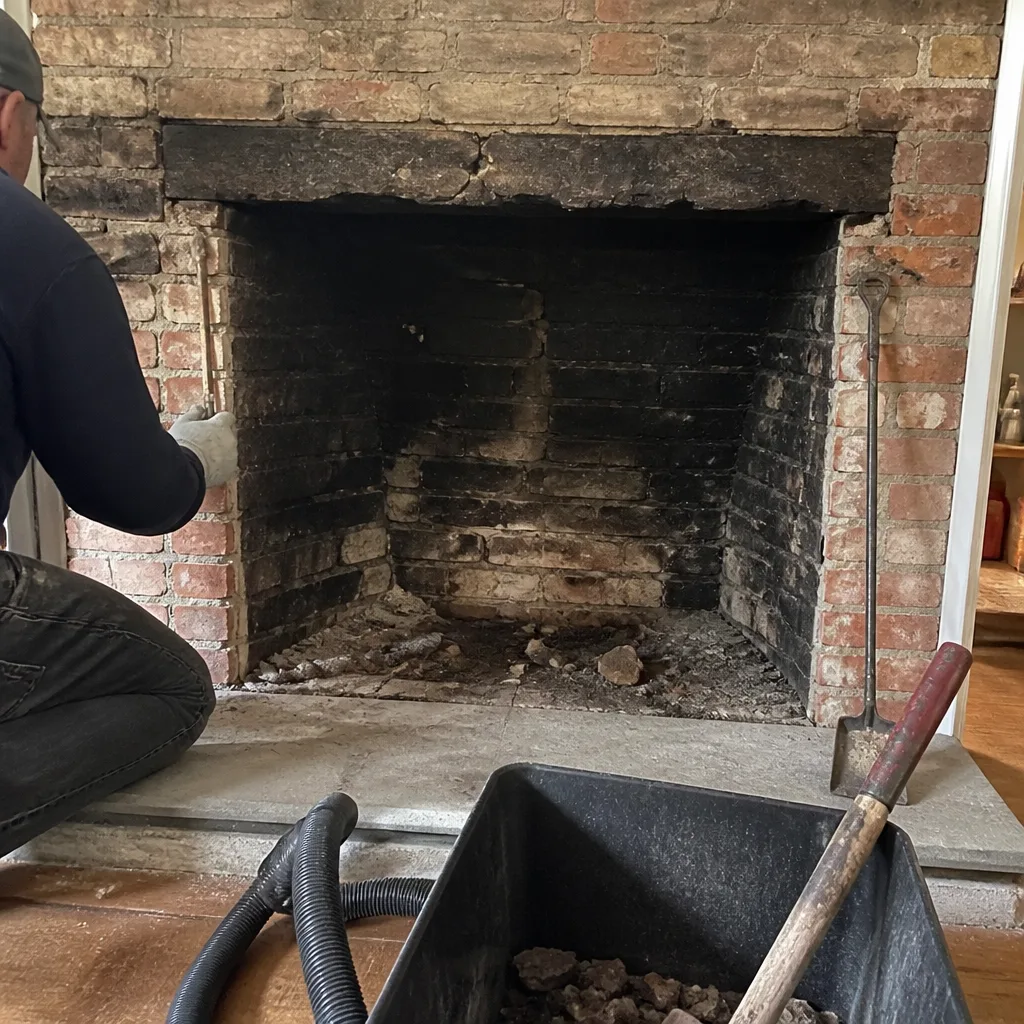 Before
 After
 Before
 After
When to Call a Professional
Call a professional when any of these are true: you’ve never had the flue inspected and you’ve been burning for more than a season; the fire smokes back or the house smells like smoke after a burn; you’ve noticed a shiny, tar-like deposit on the flue wall; the crown is cracked or the cap is missing; you’re installing a new wood stove or insert; or a previous sweep turned up a recommendation you can’t verify. Those are all situations where a camera inspection and a written diagnosis with a photo report should come first. Chimney Sweep Charlestown offers free estimates in Charlestown – call (877) 792-6155. We answer 24/7. Fast dispatch from 7am to 7pm, Sunday through Friday.
Frequently Asked Questions
There isn’t one best brand. The right brand depends on the job: ACS for catalytic treatment of glazed creosote, Rutland for routine maintenance, HeatShield for clay liner resurfacing, DuraFlex for stainless relining, and Gelco or Famco for caps and ventilation components. The better question is which product your flue needs, and that’s answered by a camera inspection. Call (877) 792-6155 for a free estimate.
Because consumer removers are formulated for light to moderate deposits, and applying one to Stage 3 glazed creosote softens the outer layer without breaking down the porous underlayer. That can seal in the deposit and make the technician’s rotary cleaning harder than it needed to be. Stage 3 needs a catalytic treatment and a professional sweep, not a retail spray bottle. Call (877) 792-6155 for a free estimate.
Ask to see the grade stamp on the liner and the UL listing before it goes in, and ask for the grade on the installation report afterward. A competent contractor will tell you 304 or 316L and explain why the grade suits your appliance and moisture conditions. If they can’t, that’s a hiring signal. Call (877) 792-6155 for a free estimate.
HeatShield is right when the clay liner is still structurally present but has cracks, spalling, or joint gaps, and the existing flue is the right size for the appliance. A stainless reline is right when the liner is missing, collapsed, or undersized. HeatShield cannot resize a flue or replace a missing liner; a reline cannot fix a failing crown. Call (877) 792-6155 for a free estimate.
Sweep frequency depends on burn volume and the appliance. A fireplace in regular use typically needs an annual sweep and inspection; heavy wood-stove use may need it more often. What matters more than the calendar is a camera inspection that shows the actual deposit stage. Call (877) 792-6155 for a free estimate.
Creosote continues to build and progress toward Stage 3, which is flammable at high flue temperatures, and the risk of a chimney fire rises with the deposit stage. A flue with restricted draft deposits faster, so a smoke-back or a smoke smell after a burn is a reason to schedule an inspection rather than wait. Call (877) 792-6155 for a free estimate.
The Bottom Line
Brand selection in chimney care is a specification question, not a shopping question. Match the product category to the job – treatment, maintenance, or structural – and match the specific product to the deposit stage and the flue material. Verify the stainless grade (304 or 316L) before installation, insist on camera evidence before accepting a reline quote, and fix the crown and cap before you spend on a liner. A contractor who can name the product and explain the reasoning is the one worth hiring. From annual sweep to full liner replacement, one call covers it. That’s how we work in Charlestown, and it’s how we’d ask you to judge anyone you hire.
Call (877) 792-6155 for a free estimate. We answer 24/7. Fast dispatch from 7am to 7pm, Sunday through Friday. Start with the Chimney Sweep Charlestown page if you want the full picture of what we do.
Written by the team at Chimney Sweep Charlestown.