
Last updated November 25, 2026
 Sweep & inspection
 Caps & crowns
 Flue relining
 Masonry repair
 Gas fireplace service
Level 1 sweep and inspection to the NFPA 211 annual standard - flue, crown, cap, and flashing checked and photographed
Chimney sweep logs do not sweep chimneys. They loosen some creosote - which then falls where a brush and vacuum still have to collect it.
Chimney Cleaning Warning Signs: A Charlestown Homeowner’s Reference Guide
Ask most Charlestown homeowners what a chimney problem looks like and you’ll hear the same three answers: smoke rolling into the living room, a visible crack in the brick, or a fire that won’t draw. Those are real symptoms, but they’re late-stage ones. By the time smoke is backing into a room, creosote has already built to a dangerous level or a flue has already lost its seal. The signals that matter most are quieter: a chalky white bloom on exterior brick, a fire that burns a little lazy, a smell you can’t quite place. This guide covers the early warning signs most people dismiss as weathering or bad firewood, explains what each one actually means for the flue and masonry, and shows you how to tell the difference between a chimney that needs a sweep and one that’s telling you the liner is failing. We’ll walk through Charlestown’s specific conditions, from its stock of older brick chimneys to the freeze-thaw cycling that hits masonry here every winter.
Quick Answer
The most reliable early warning signs of a chimney problem in Charlestown are efflorescence (white chalky stains on exterior brick), spalling brick faces, a lazy or slow draft, unusual odor when the fireplace is cold, and soot patterns inside the firebox that suggest poor draft. Any single one on its own may be minor; two or more together usually point to moisture intrusion, a deteriorating liner, or heavy creosote, and all three warrant a professional inspection before the heating season starts. Regular annual sweeping catches these early, when repairs are still small.
Styles & brands we work with
- Sweep & inspection
- Caps & crowns
- Flue relining
- Masonry repair
- Gas fireplace service
Table of Contents
- Efflorescence, Spalling, and What Your Brick Is Trying to Tell You
- “Lazy Smoke” and What Slow Draft Actually Means
- Reading Odors: Musty, Acrid, and Sulfuric
- Firebox Discoloration and Soot Patterns
- Carbon Monoxide and Headaches: Chimney First, Appliance Second
- Seasonal Timing: Why Charlestown Chimneys Fail on a Schedule
- Creosote Stages and When They Become Dangerous
- What You Can Safely Check Yourself
Efflorescence, Spalling, and What Your Brick Is Trying to Tell You
Walk around the outside of a Charlestown house and look closely at the chimney stack. If you see a white, chalky bloom creeping down the brick, that isn’t cosmetic. It’s efflorescence, and it’s the mineral residue left behind when water moves through masonry and evaporates at the surface. Water inside the brick dissolves salts from the mortar and clay, carries them to the face, and leaves them there as a deposit. Every bloom you see on the outside means water is traveling somewhere inside the chimney structure. That’s the warning sign most homeowners walk right past.
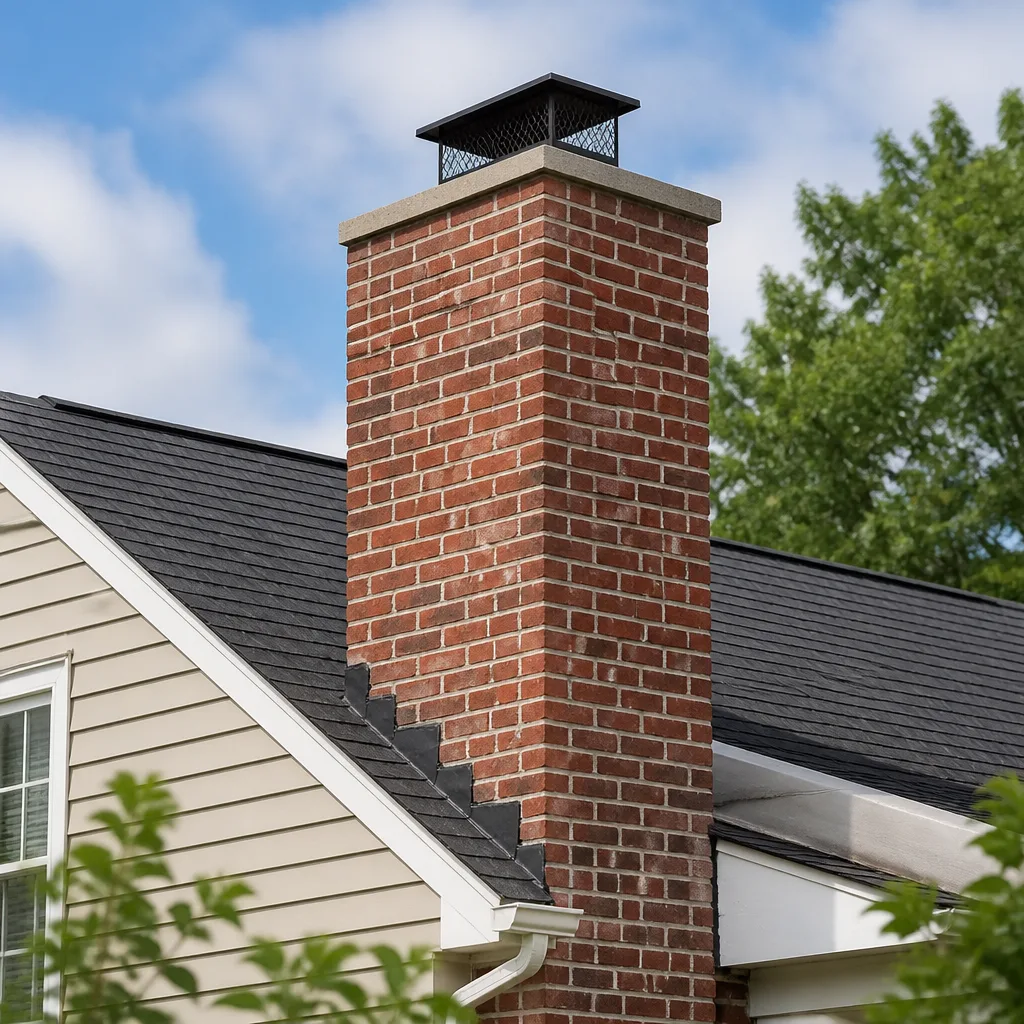
Efflorescence is an early diagnostic signal because it typically appears one to three seasons before the damage it predicts becomes visible. Once the masonry has been wetted and dried enough times, the brick face starts to flake off in layers. That’s spalling, and it’s a different problem. Spalling brick cannot be reversed. The freeze-thaw cycles Charlestown sees every winter are what push the process along: water enters a hairline crack, freezes overnight, expands, and pries the crack wider. Repeat that over a season and a small crown crack becomes a structural issue at the top of the stack.
What to look for, from the ground:
- White bloom on the brick face – efflorescence, moisture moving through the masonry.
- Brick faces flaking or crumbling – spalling, meaning the brick has already been damaged by water and frost.
- Dark staining near the crown – often a sign of a failed crown or an unsealed cap.
- Rust streaks – the chimney cap or damper hardware is rusting from moisture, which usually means water is getting past the crown.
- Mortar joints that look recessed or soft – repointing will be needed before the joints fail further.
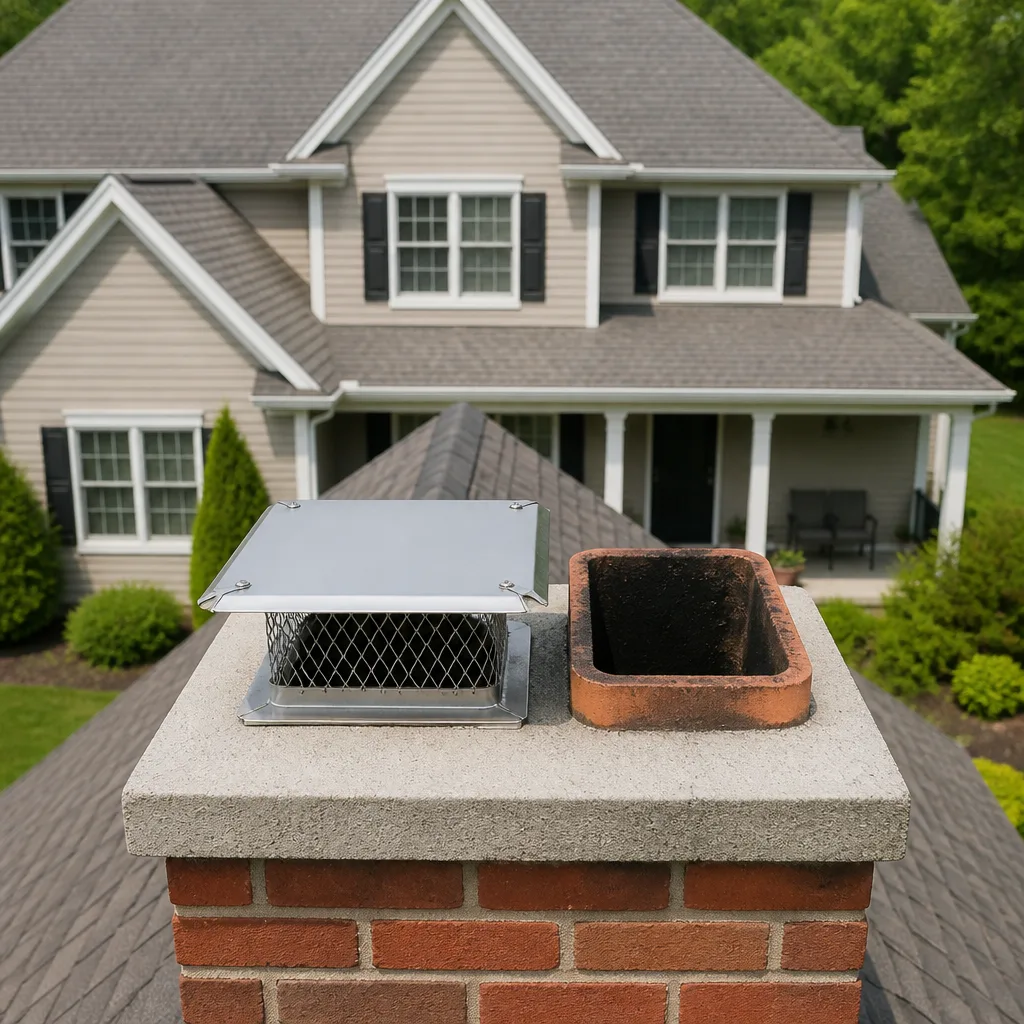
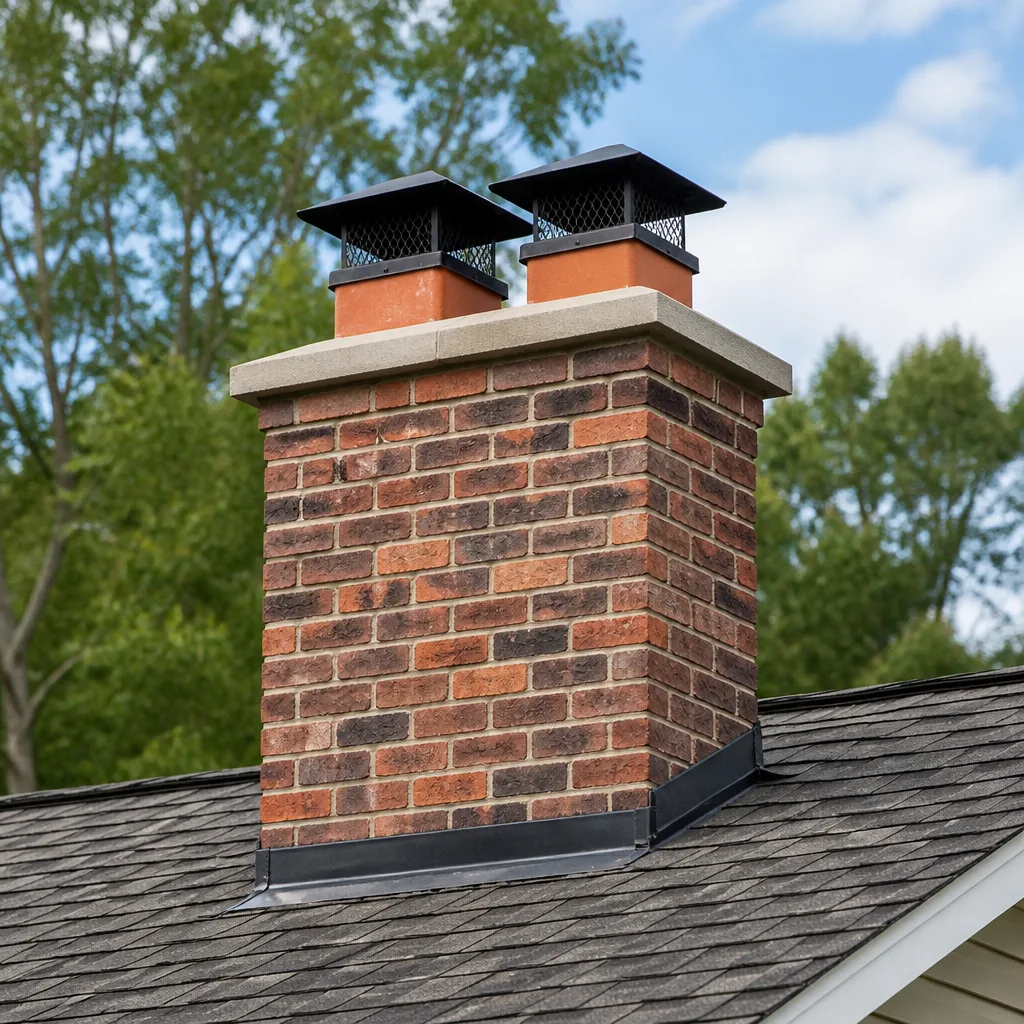
If efflorescence is the only sign and the brick faces are still intact, a chimney inspection will find out where the water is entering. Often it’s a cracked crown or a missing cap, both of which we repair as part of our chimney cap & crown work. If spalling has started, that means the masonry has already been through multiple wet-dry and freeze-thaw cycles, and the fix will be larger.
“Lazy Smoke” and What Slow Draft Actually Means
A fire that burns slow, with smoke drifting rather than rising sharply, usually gets blamed on wet wood. Sometimes that’s correct. But a lazy fire that stays lazy no matter how dry the wood is telling you something structural. In a properly drawing chimney, hot gases leave the firebox at a steady rate and pull fresh air in to replace them. When that flow drops, three things usually cause it, and only one of them is about wood.
- Blockage in the flue. Creosote buildup, a nesting bird or animal, or a fallen tile inside the chimney constricts the passage. The fire smolders because the exhaust has nowhere to go quickly. This is the most urgent cause and the one that needs a sweep and inspection right away.
- Undersized or mismatched flue. Many older Charlestown homes were built with a flue sized for a coal appliance or for a smaller firebox than the one now in place. If the flue is too narrow for the appliance, draft will always be lazy, and no amount of firewood management will fix it. A flexible liner in the correct size is the usual repair, and this is where a DuraFlex system gets specified.
- Deteriorated flue interior. Clay tile liners that have cracked or lost their joints let gases leak into the masonry before they reach the top. Draft drops, and worse, hot gases are now inside the chimney structure rather than inside the flue. This is the one that turns a small fix into a full reline, and it’s the reason we treat slow draft as a structural question first and a firewood question second.
In our experience, the homes that come to us with “lazy smoke” complaints often turn out to have two of these three at once. A blocked flue with a marginal liner is common. A chimney inspection resolves the question in a single visit: the sweep finds the blockage, and the inspection tells you whether the liner is sound.
Reading Odors: Musty, Acrid, and Sulfuric
A chimney smell is a chemical message. Different smells point to different problems, and learning to tell them apart helps you decide whether the next step is a sweep, an inspection, or a call to us because you’re worried about carbon monoxide. Here’s how the three most common odor profiles break down.
Musty odor
Musty means moisture. Creosote, soot, and masonry all hold and release water, and when the chimney has been damp for a while, the smell turns earthy and closed-in. That dampness is the same water causing efflorescence on the outside. Common sources are a missing or rusted cap, a crown that has cracked, or flashing where the chimney meets the roofline that has failed. Left alone, damp creosote becomes more acidic, which eats into the flue liner and mortar joints faster than dry creosote does.
Sharp, acrid odor
An acrid or sharp smell, especially when the chimney is cold and the house is closed up, is usually Stage 2 or Stage 3 creosote. Stage 2 creosote is the flaky, crusty layer that forms when smoke condenses on a cooler flue surface. Stage 3 is the glazed, hardened type that requires more than a standard sweep to remove. Acrid smell in the off-season is one of the clearest warning signs that a sweep is overdue, because that same creosote is the fuel load in a chimney fire. We see acrid odor complaints in Charlestown most often in late summer and early fall, when a chimney that hasn’t been used all season starts baking in the sun and off-gassing.
Sulfuric or rotten-egg odor
A sulfuric smell points inward, toward the flue liner itself. Deteriorating clay tile can generate that odor as the tile breaks down. In some cases it’s the seam material between tiles failing. Sulfuric smell combined with slow draft or a wobble in the draft is the combination that most often means a liner is failing and needs to be inspected promptly. A chimney inspection with camera evidence will show you exactly what’s happening inside the flue, and we won’t quote liner work without that evidence in front of you. If the liner is sound but the joints are deteriorated, HeatShield ceramic resurfacing can often restore the flue without a full tear-out.
Firebox Discoloration and Soot Patterns
The inside of the firebox is a record of how the fire has been drawing. Where the soot lands tells a sweep what the draft is doing, and where the heat has been concentrating tells us whether the firebox brick and mortar are holding up. When you open the damper and look inside, here’s what a sweep reads from the pattern.
- Soot concentrated at the top front of the firebox, above the damper – the fire is drawing but the draft is poor. Hot gases are pooling at the top of the opening before they escape. Often a flue issue, not a firebox issue.
- Heavy soot on the firebox side walls, low – the fire is burning too cool or too slowly. This usually corresponds with a firebox that’s undersized for the amount of wood loading, or a flue that’s not pulling. Combined with lazy smoke, this points toward a flue restriction.
- White or grey powder on the firebox brick – the firebox brick is spalling from heat and moisture. Firebox brick has a limited service life, and when it starts to break down, a fireplace repair rebuild is the fix.
- Smoke staining on the firebox face, outside the opening – the fire has been smoking into the room at some point. Even if it’s not doing it today, the stain tells you it happened, and it’s worth having a sweep look at the flue condition now.
- Cracked mortar joints inside the firebox – heat has been working on the firebox more than it should. A firebox with failing joints can let heat into the chimney structure, which is a genuine fire hazard and needs an inspection.
We think of the firebox as a diagnostic map. Each soot pattern points to a different place to look, and the sweep usually knows which flue condition to expect before the camera ever goes down.
Carbon Monoxide and Headaches: Chimney First, Appliance Second
If a carbon monoxide detector has gone off or you’re getting headaches when a fire is burning, the first assumption should be that the chimney is failing to vent. That’s not an alarmist position; it’s the order in which to rule things out. A gas furnace or stove can be the source, but in a home with a wood-burning fireplace or stove in use, a chimney problem is the most likely cause of CO in the living space. Vented gases that should be going up the flue are coming back into the room. That’s a chimney problem until it’s proven otherwise.
The classic signs that a chimney is venting improperly, and should prompt an immediate call:
- A carbon monoxide detector alarm during or shortly after a fire.
- Headaches, dizziness, or nausea that appear when the fireplace is in use and clear when it isn’t.
- A fire that burns with a blue or orange-yellow flame rather than a normal wood fire, or a fire that puts itself out before the wood is spent.
- Soot streaks around the top of the firebox opening or on the ceiling above the fireplace.
- A musty, sharp, or unusual smell that you didn’t have before.
Do not run the fireplace again until it’s been inspected. Open a window, get fresh air, and call us. Carbon monoxide is odorless and colorless, and the headache pattern is often the only signal a homeowner gets before the detector catches it.
Seasonal Timing: Why Charlestown Chimneys Fail on a Schedule
Charlestown’s climate is hard on masonry. Winter freeze-thaw cycling, spring rain, summer humidity, and the seasonal swing between an idle chimney and one running hot every weekend all push the masonry and liner through repeated stress. Chimney problems tend to follow a predictable calendar here, and knowing the cycle tells you when to look.
- Late spring and early summer – the freeze-thaw damage from the winter starts showing up as spalling, cracked crowns, and loosened mortar joints. This is the best time to schedule crown and cap repairs, because the masonry is dry and workable.
- Late summer – acrid and musty odors from the chimney as it warms up in the sun. Creosote that built up over the previous season starts baking and off-gassing. Sweeping before the season starts is the fix.
- Early fall – the first fires back in the fireplace. This is where lazy draft, musty smell, and slow starts show themselves. If your chimney hasn’t been swept or inspected since the previous season, get it done before the first sustained fire.
- Winter – the season of chimney fires and CO alarms. If you’ve skipped the sweep and the fire has been running heavily, you’re working with an unknown creosote load. A chimney fire can happen quietly at any point during the season.
Charlestown’s brick rowhouses and older two- and three-family homes usually have chimney stacks that are original to the building. That’s not a problem in itself, but the masonry is older than the fireplace, the cap, and often the liner. Inspections that catch the small stuff in spring are what keep a fall sweep from turning into a summer reline.
Creosote Stages and When They Become Dangerous
Creosote buildup is the most common chimney fire cause, and it’s the warning sign that’s hardest for a homeowner to check on their own. The stage matters more than the amount: a thin coating of Stage 1 creosote can be brushed out in a standard sweep, while Stage 3 requires a different tool and a different plan.
- Stage 1: soot and light dust. Removed with a standard sweep. This is normal and expected after a normal burning season.
- Stage 2: flaky, crusty, or shiny patches. Still brushable in most cases but accumulates faster. A chimney with Stage 2 creosote needs sweeping more often, and acrid odor is the tell.
- Stage 3: hardened, glazed, tar-like coating. This is the dangerous stage. It burns hot, it’s hard to remove, and it’s the most likely source of a chimney fire. This is where a sweeps-only tool set falls short; the job needs a specialist who can remove the glazed layer without damaging the liner, or identify that the liner needs relining.
You cannot reliably judge creosote stage from the firebox. The buildup is inside the flue, above the damper, where you can’t see without a camera. That’s the reason a yearly sweep matters even in a year when the fire didn’t see heavy use. Most chimney fires in Charlestown, in our experience, happen in homes that haven’t had a sweep on the calendar for two or three seasons. The fire runs fine for years and then one night the stuff that was scheduled to be removed ignites.
What You Can Safely Check Yourself
Your role is to notice and report. Some warning signs are visible from the ground and don’t require getting on a ladder or opening anything up; others should wait for a professional. Here’s what we recommend to homeowners, in the safe-check category.
From the ground, outside
- White bloom, dark staining, and rust streaks on the exterior brick or crown.
- Brick faces that have started flaking or crumbling.
- Missing, rusted, or damaged chimney caps.
- Cracked or missing mortar at the crown.
- Visible cracks in the chimney stack.
Inside, without opening anything
- Smoke smell when the fireplace is off, especially in the off-season.
- Musty, acrid, or sulfuric odor.
- Soot staining outside the firebox opening or on the chimney breast.
- Carbon monoxide detector operation (test it monthly, replace the batteries on schedule).
- Headaches or dizziness during fires.
What to leave to us
The inside of the flue, the firebox seams, the damper assembly, the liner, and the chimney cap all require a trained eye and the right camera equipment. The interior of a wood-burning chimney is a combustion pathway, and what looks like a routine inspection is also a place where a missed issue can become a fire. We’d rather you didn’t climb a roof to check mortar joints or reach into the firebox to pry at the damper. The price of an inspection is small compared to the price of a missed liner crack. From annual sweep to full liner replacement, one call covers it, and the inspection report tells you exactly what your chimney is doing.
Common Mistakes to Avoid
- Treating efflorescence as cosmetic. A quick wire brush makes the stain disappear and does nothing about the water causing it. The stain will come back, and the freeze-thaw damage continues underneath. Address the source, not the symptom.
- Blaming every lazy fire on the firewood. Wet wood is one cause of slow draft, but if the fire is lazy with dry wood too, the flue is the problem. Many Charlestown drafts turn out to be a partially blocked flue or an undersized liner. Sweep first, then diagnose.
- Ignoring the musty smell in the off-season. Musty odor means moisture, and moisture is the single biggest cause of masonry failure. In a Charlestown climate with hard freeze-thaw cycling every winter, a damp chimney will spall within a couple of seasons if the water source isn’t fixed.
- Assuming the CO alarm was a false positive. A detector alarm during a fire is a chimney venting problem until an inspection rules it out. The false-positive rate on functioning CO detectors is low enough that you don’t want to gamble on it.
- Using a handyman with a brush. A general handyman can sweep soot in a straight flue, but the moment the job needs camera inspection, cap and crown work, HeatShield resurfacing, or a DuraFlex reline, the handyman has to refer it out. You end up with two contractors and no single answer about what your chimney needs.
- Skipping the sweep in a low-use year. A chimney that saw three fires last season still accumulated creosote. The issue is buildup over time, not just total wood burned. Creosote stages are determined by how often the flue has been cleaned, not how much it was used.
- Waiting until smoke backs into the room to call. That’s the late-stage sign. Early warning signs like efflorescence, acrid odor, and lazy draft are the ones that let a repair stay small.
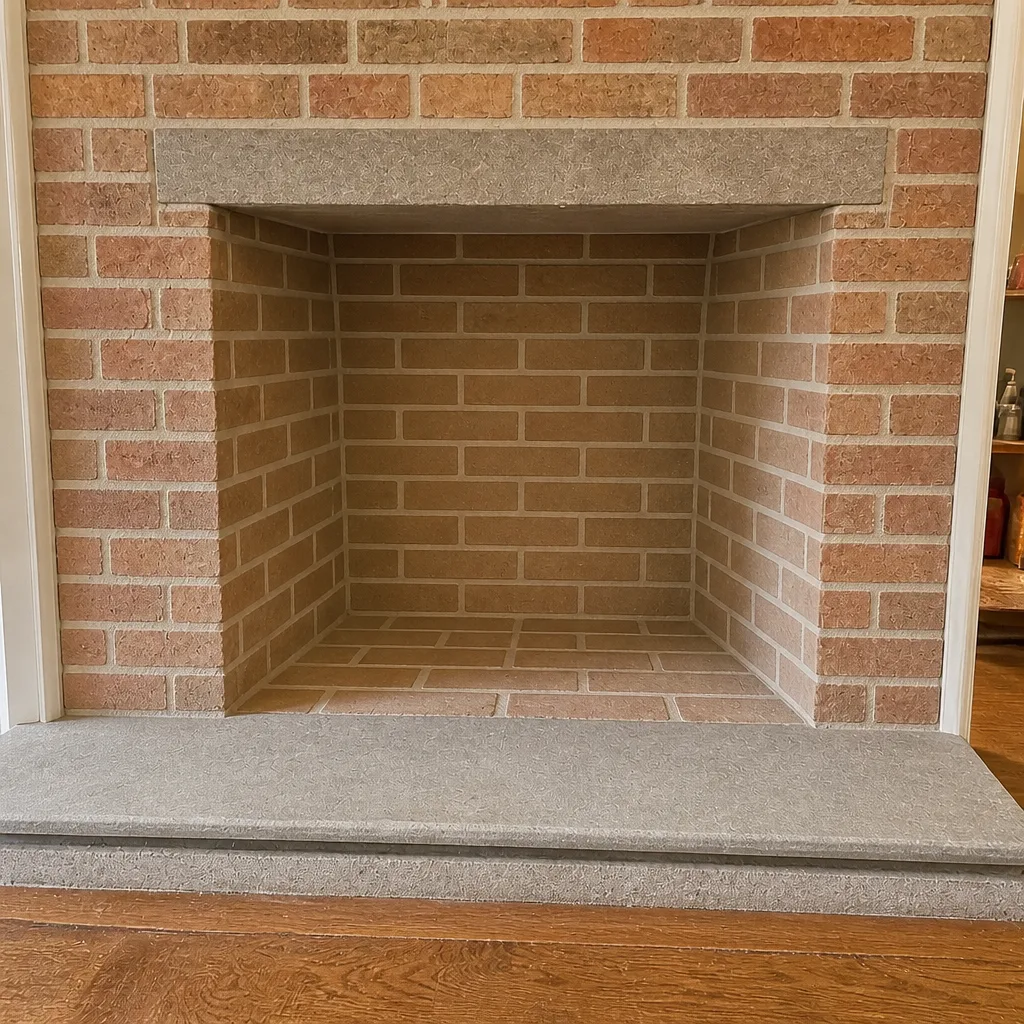
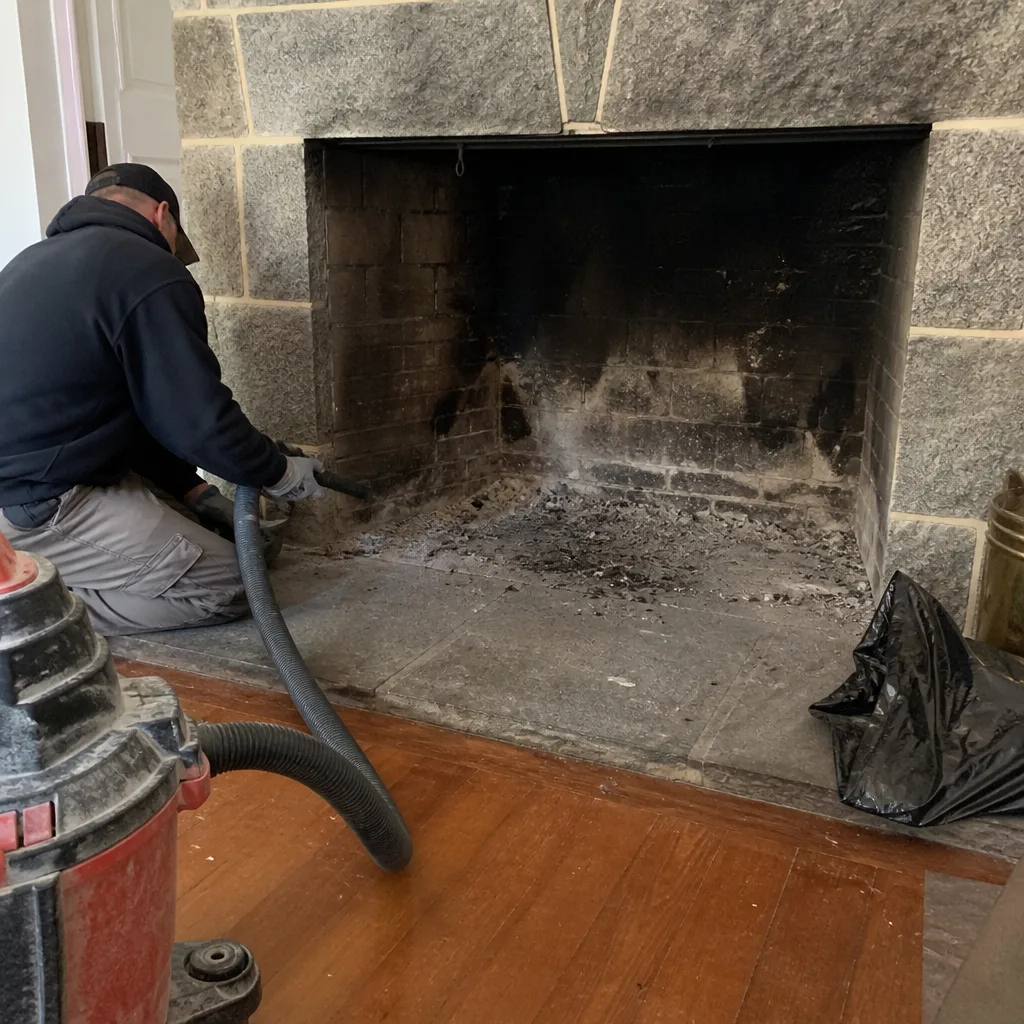
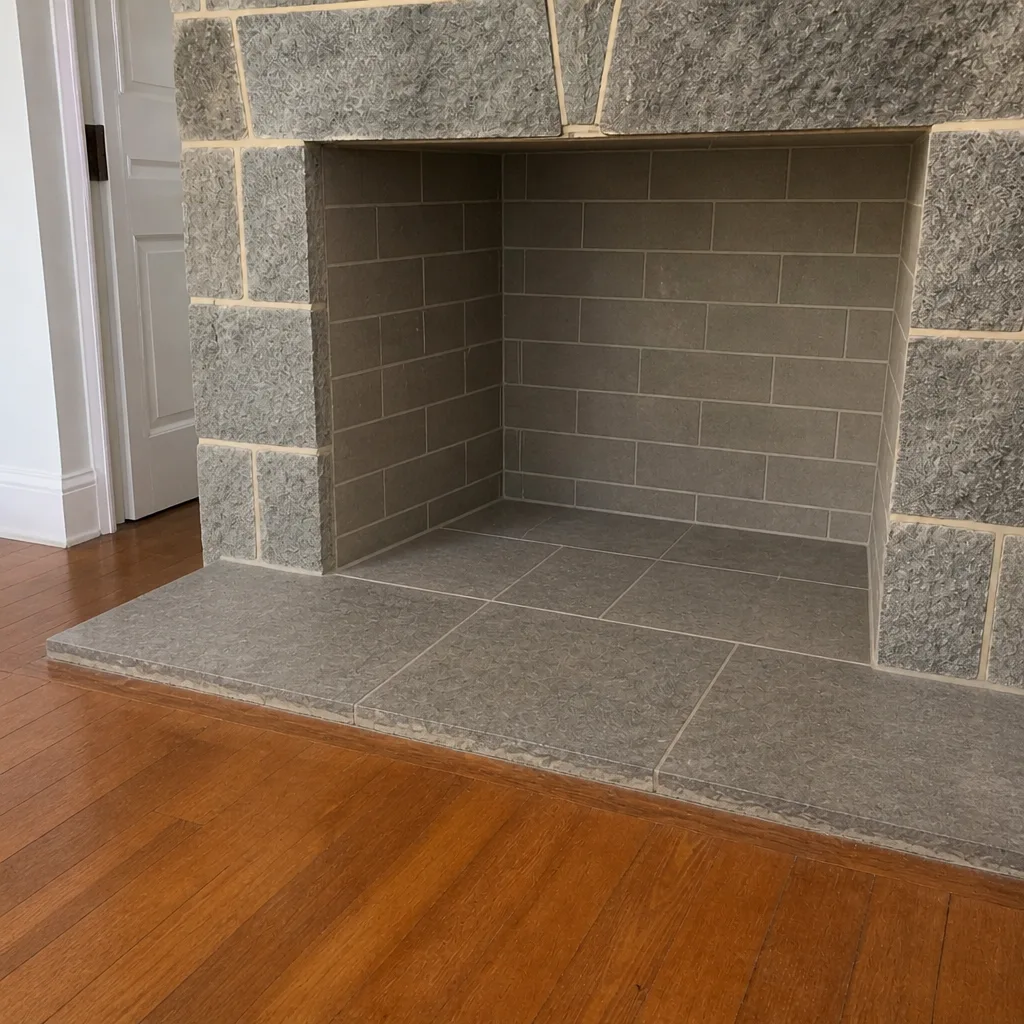
See the difference
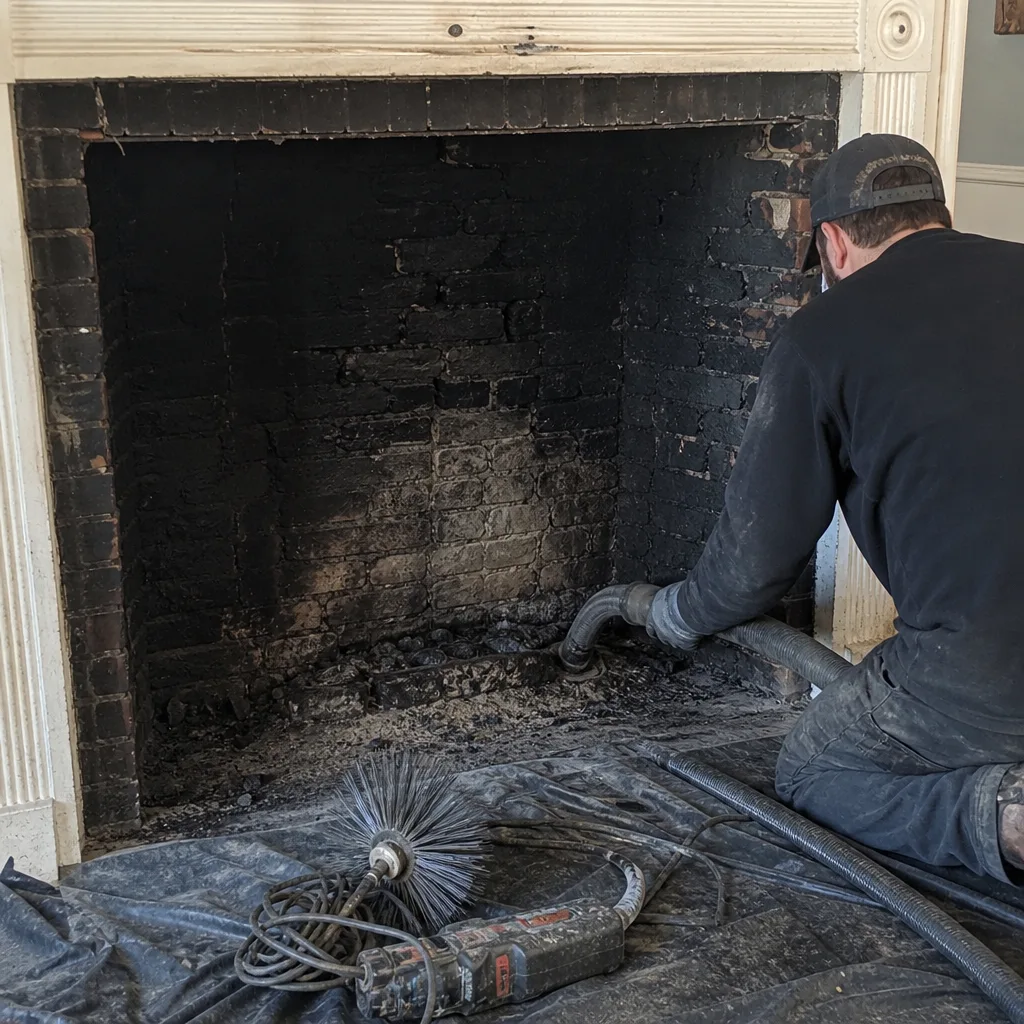 Before
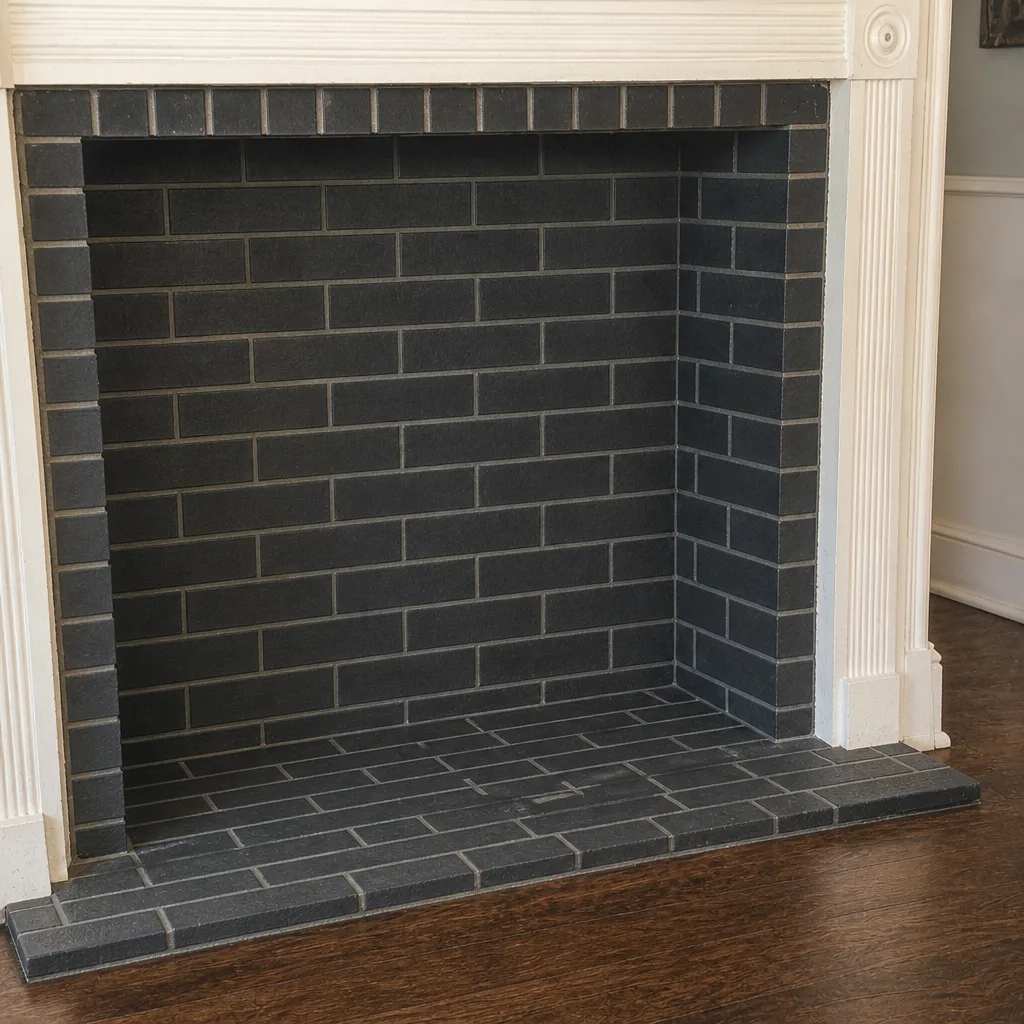 After
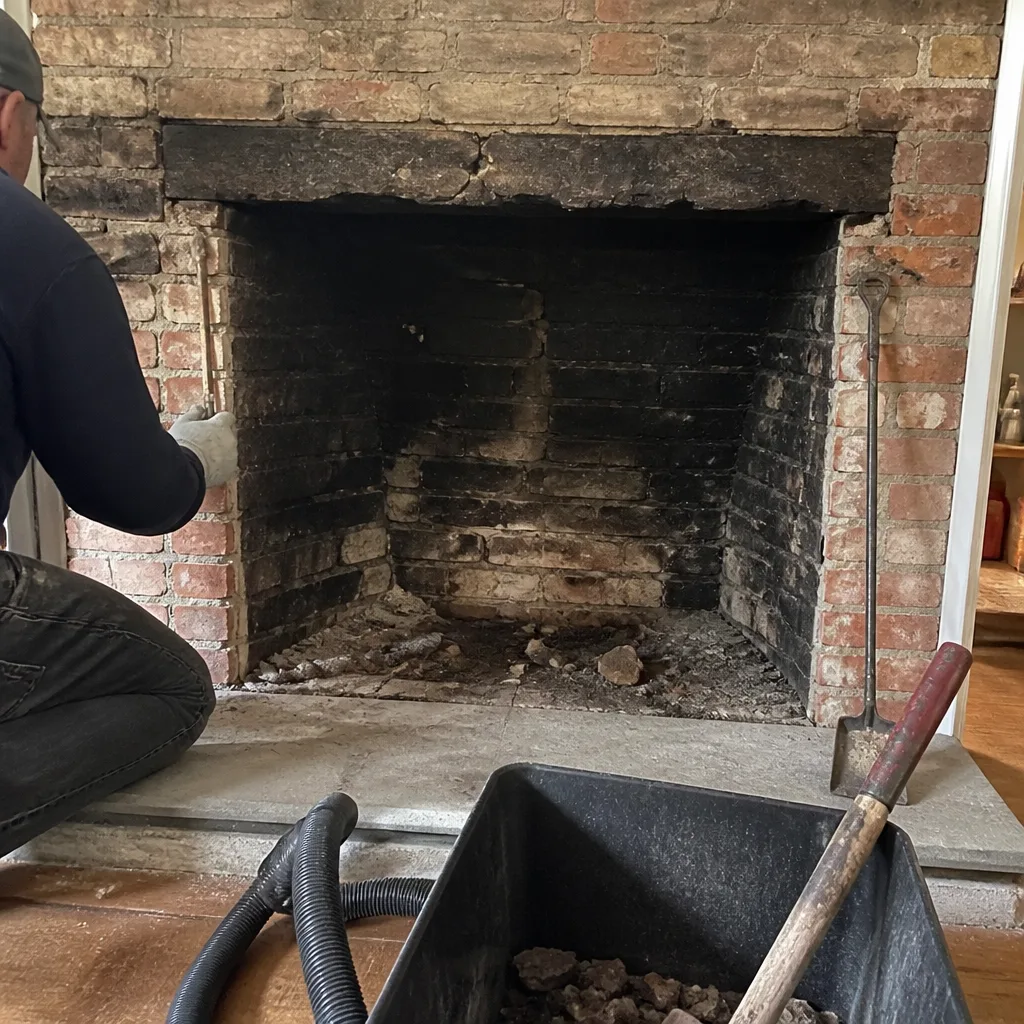 Before
 After
 Before
 After
When to Call a Professional
Some signs warrant a wait-and-see approach; others don’t. Call us if you see any of the following: a white bloom or dark staining on your exterior brick, brick faces flaking or crumbling, a carbon monoxide detector alarm during a fire, headaches or dizziness that appear with fire use, an acrid or sulfuric odor inside the house, slow draft even with dry wood, soot staining on the chimney breast or ceiling, or a fireplace you haven’t had swept in the past year. These are the cases where a professional inspection finds something specific and tells you what it costs to fix. If the sign is small and you’re not sure whether it’s urgent, an inspection answers that question quickly, and nothing is quoted without camera evidence in front of you. In our experience, the homeowners who call on the early signs spend less on repairs than the ones who wait for the dramatic ones. Chimney Sweep Charlestown offers free estimates in Charlestown. Call (877) 792-6155. We answer 24/7. Fast dispatch, 7am-7pm.
Frequently Asked Questions
Once a year is the standard, and it’s the recommendation we give most Charlestown homeowners. If you burn wood heavily through the season, or you use a wood stove rather than an open fireplace, twice a year is more realistic. The annual sweep is also the inspection opportunity: it’s the visit where creosote stages get checked, the liner gets looked at, and any early warning sign gets caught while the repair is still small. Call (877) 792-6155 for an exact quote on a sweep. Estimates are free.
Efflorescence is the white, chalky bloom left when water moves through masonry and evaporates at the surface, and it means water is currently traveling inside the chimney. It typically shows up one to three seasons before liner and crown damage becomes visible, which is why we treat it as an early warning sign rather than a cosmetic one. Left alone, the freeze-thaw cycle widens cracks and starts spalling the brick face. An inspection will find the water source, whether that’s a failed crown, a missing cap, or faulty flashing. Call (877) 792-6155 for an exact quote. Estimates are free.
Test wet firewood first: if the fire is lazy with dry, seasoned wood too, the flue is the problem, not the wood. A lazy fire with dry wood usually means a partially blocked flue, an undersized liner, or deteriorated tile inside the flue. All three need a sweep and inspection rather than more wood management. Consistent lazy draft is one of the earliest signs of a flue restriction, so it’s worth having looked at before the smoke backs into the room. Call (877) 792-6155 for an exact quote. Estimates are free.
Musty smell means moisture intrusion, acrid smell points to Stage 2 or 3 creosote, and sulfuric smell often means the clay tile liner is deteriorating. Each odor profile points to a different starting place for a sweep. If the smell is musty and shows up in the off-season, water is getting into the chimney and needs to be found. If it’s acrid, the creosote load is at a dangerous stage and a sweep is overdue. If it’s sulfuric, an inspection of the liner should come first. Call (877) 792-6155 for an exact quote. Estimates are free.
It’s the chimney until proven otherwise. In a home with a wood-burning fireplace or stove in use, an improperly venting chimney is the most likely source of CO in the living space, and the detector alarm is the signal that vented gases are coming back into the room. Don’t run the fireplace again until it’s been inspected. A chimney inspection with camera evidence tells you whether the flue is sealed and venting, and if the furnace is the true source, an HVAC specialist takes it from there. Call (877) 792-6155 for an exact quote on an inspection. Estimates are free.
The interior of a wood-burning chimney is a combustion pathway, and cleaning it safely means working with the right brush and rod for the flue size, plus the ability to see what’s happening inside the flue with a camera. A homeowner can reach the firebox and clean soot off the firebox walls, but the flue itself and the creosote stage inside it should be evaluated by a trained sweep. The sweep is also where the inspection happens, and that’s where the early warning signs on this list get their answer. A chimney sweep in Charlestown is a once-a-year visit that takes less time than most homeowners expect and it’s the cheapest step in the whole list. Call (877) 792-6155 for an exact quote. Estimates are free.
The Bottom Line
The warning signs that matter most in Charlestown are rarely the ones on the internet lists. Efflorescence on the brick, spalling faces, lazy smoke with dry wood, musty or acrid or sulfuric odor, and soot patterns in the firebox are the signals that show up one to three seasons before the smoke starts rolling into the room. The chimney’s condition is not the same as the fireplace’s appearance: a firebox can look fine while the flue above the damper is at Stage 3. Look at the exterior brick from the ground every season, test the CO detector, and schedule a sweep once a year. The yearly sweep is also the inspection, and if the visit reveals cap damage, a liner issue, or a firebox in need of repair, we can quote it and schedule it from the same visit. From annual sweep to liner resurfacing and relining with HeatShield and DuraFlex systems, we specify the right product for your flue and stand behind the installation. For a proper look at a full Chimney Sweep Charlestown, we work with DuraFlex flexible liner systems, HeatShield ceramic resurfacing, and Olympia Chimney components to match the repair to the flue, not the other way around.
Chimney Sweep Charlestown
Call (877) 792-6155. We answer 24/7. Fast dispatch from 7am to 7pm, Sunday through Friday. Free estimates in Charlestown and the surrounding area.
Written by the team at Chimney Sweep Charlestown.