
Last updated November 25, 2026
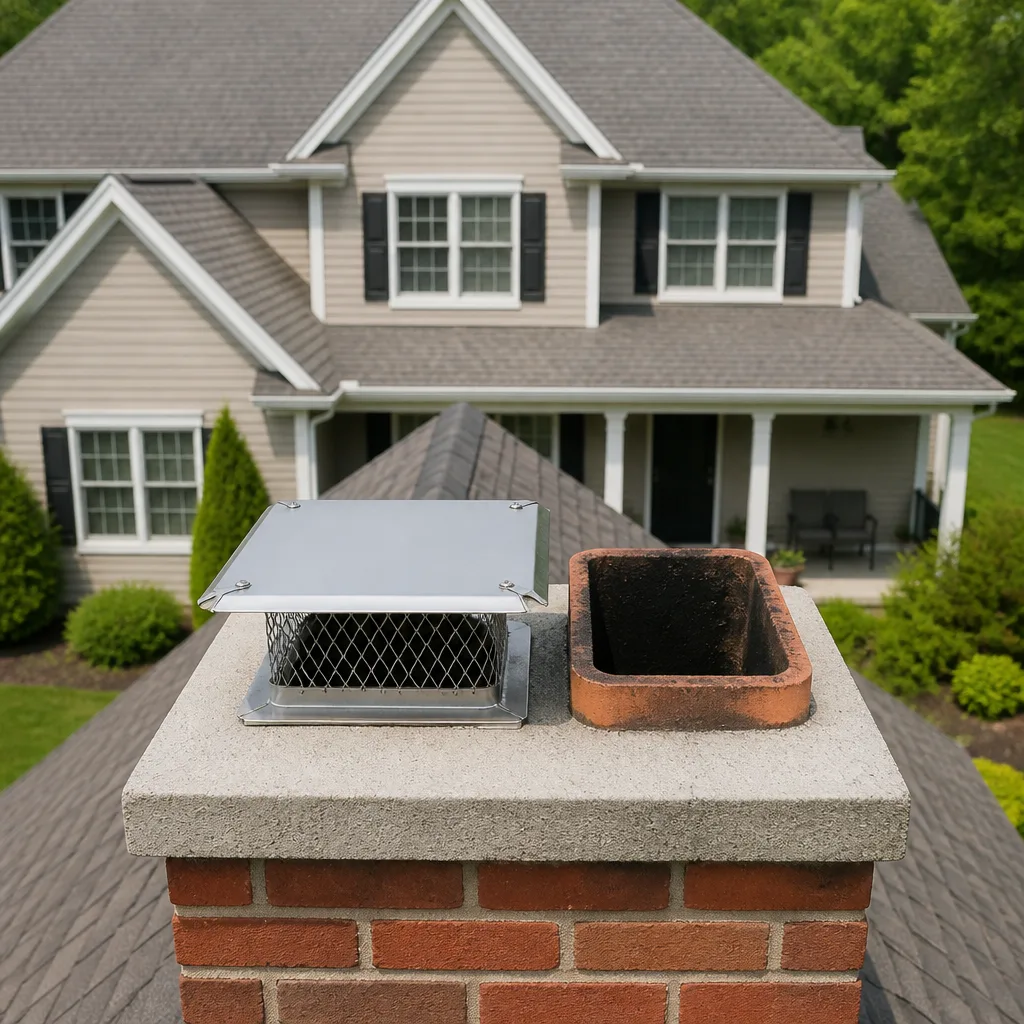 Sweep & inspection
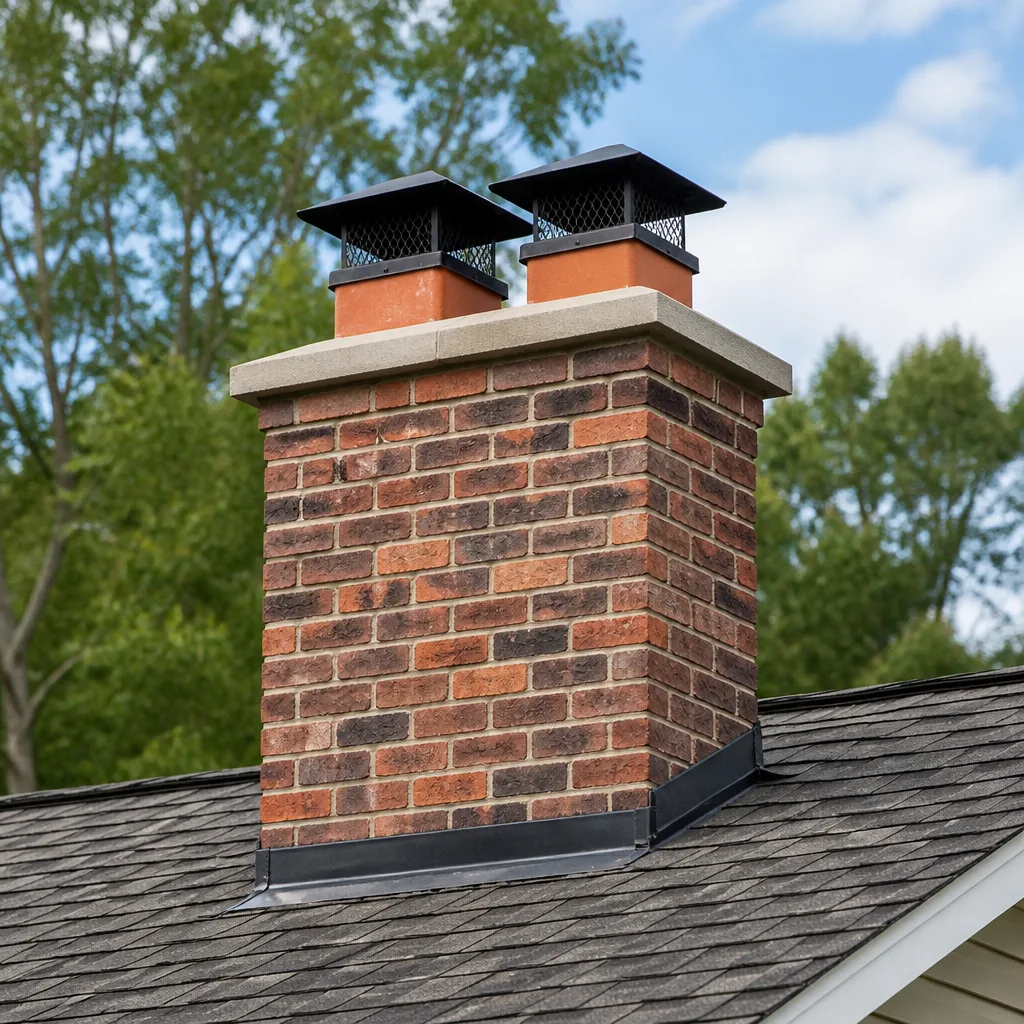 Caps & crowns
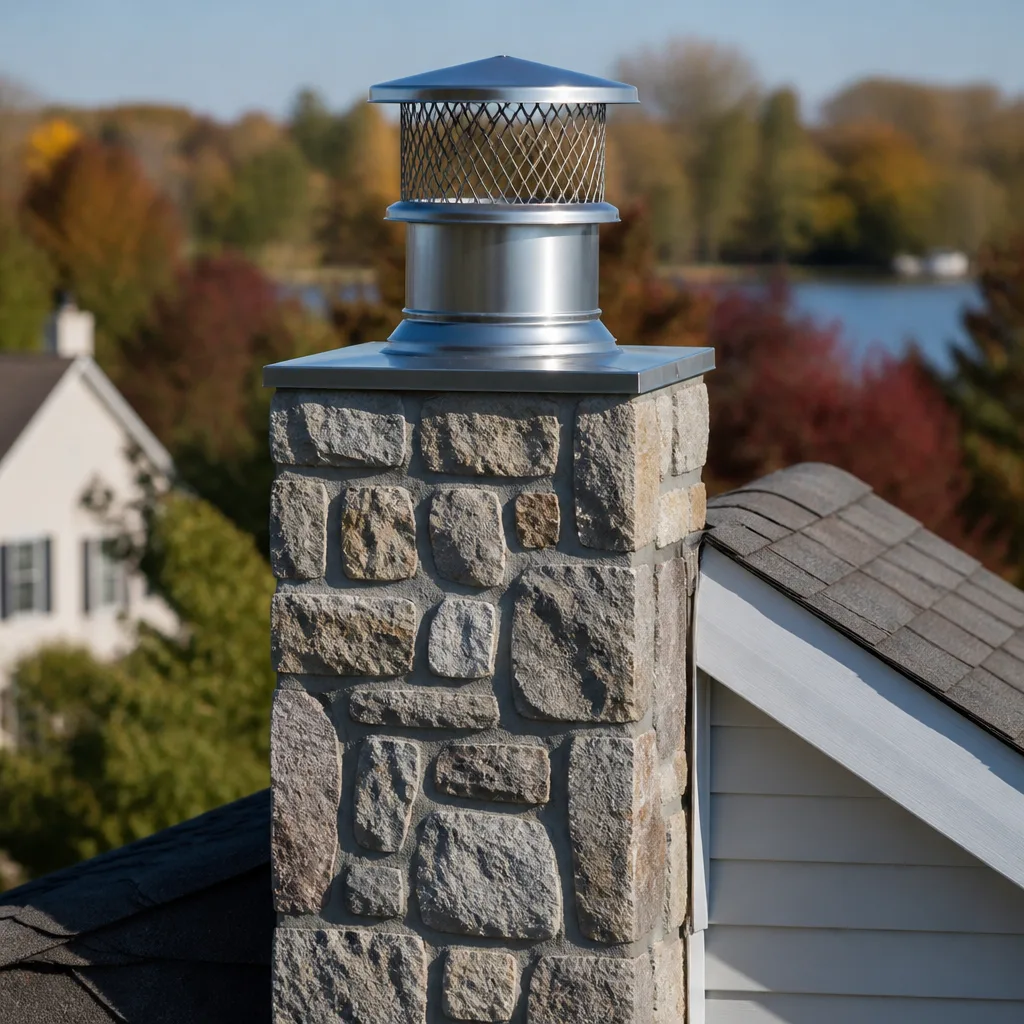 Flue relining
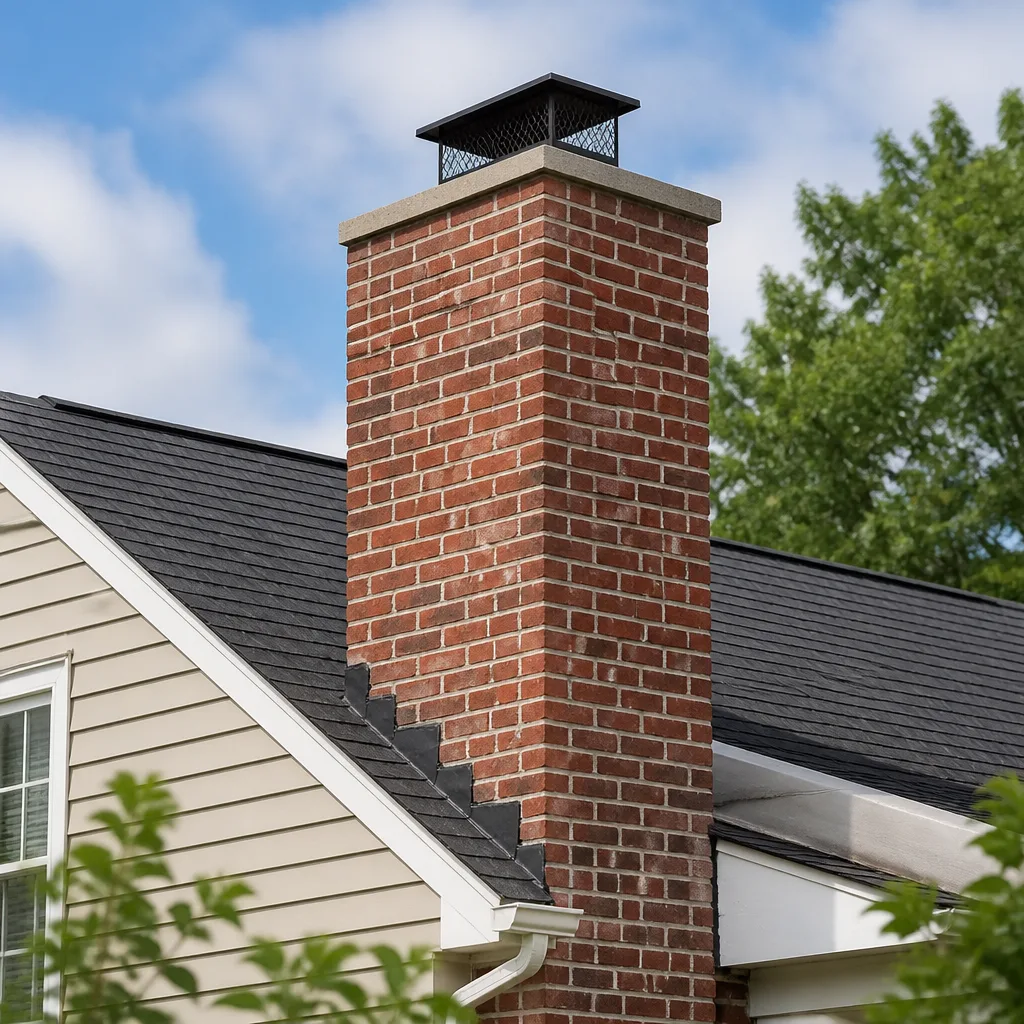 Masonry repair
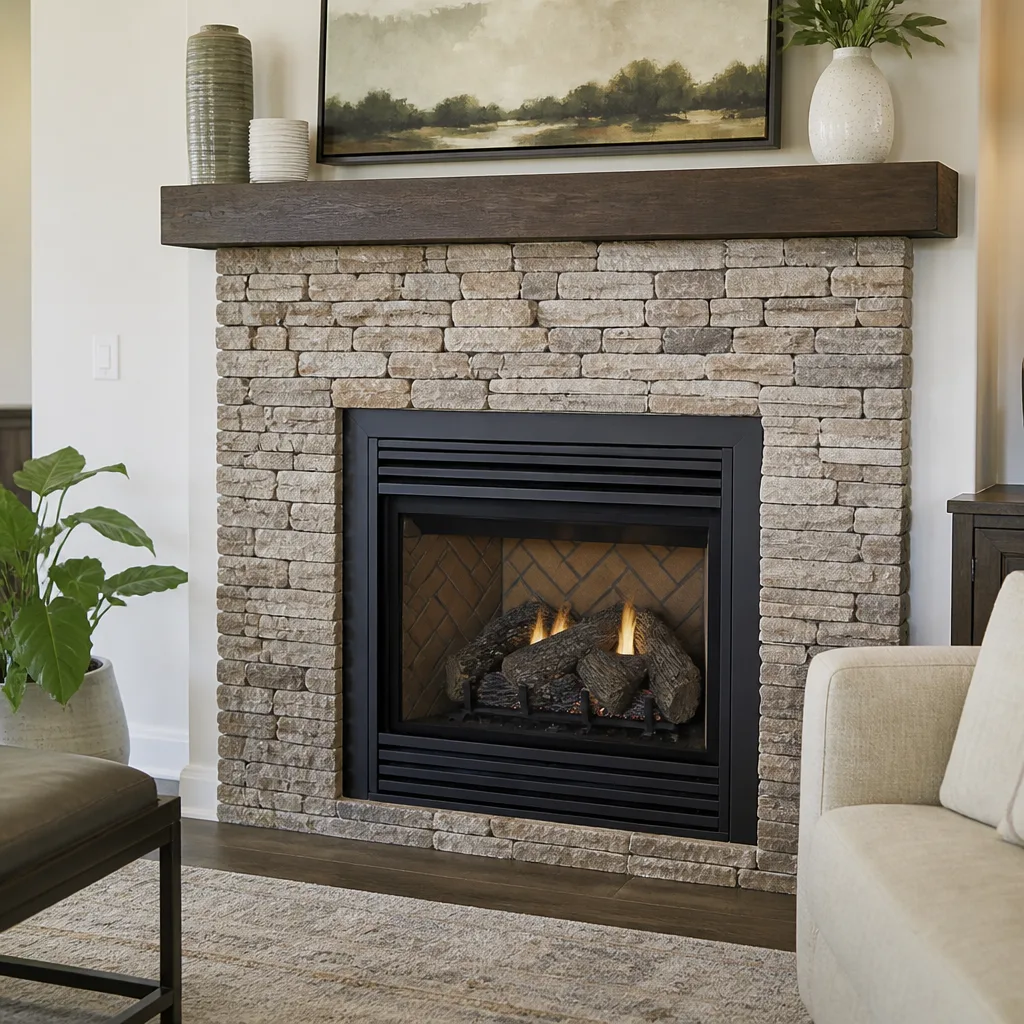 Gas fireplace service
Level 1 sweep and inspection to the NFPA 211 annual standard - flue, crown, cap, and flashing checked and photographed
Chimney sweep logs do not sweep chimneys. They loosen some creosote - which then falls where a brush and vacuum still have to collect it.
How to Hire a Chimney Cleaning Contractor in Charlestown: A Step-by-Step Guide
The hardest part of hiring a chimney sweep in Charlestown usually isn’t finding one. It’s figuring out which of the names that come up actually does chimney work as a trade, and which is a general handyman with a brush and a ladder. CSIA certification is the floor, not the ceiling, yet plenty of the businesses advertising chimney services around Greater Boston can’t point to a certified sweep on their active roster. That gap is where homeowners get burned, sometimes literally. This guide gives you the exact filter: what certifications to verify, which questions expose a weak contractor, how to check a Massachusetts registration, and what a real itemized estimate looks like. You’ll finish knowing how to hire well in Charlestown.
Quick Answer
To hire a chimney cleaning contractor in Charlestown, verify three things before you book: a current CSIA-certified sweep on staff, an active Massachusetts Home Improvement Contractor registration for any repair work over the minor-repair threshold, and a written scope of work that itemizes the sweep, a camera inspection, and travel protection. Then ask about liner sizing competency and demand a photo report from the inspection. If any of those three checks fails, keep calling. A legitimate contractor will hand you all of it without being pushed.
Styles & brands we work with
- Sweep & inspection
- Caps & crowns
- Flue relining
- Masonry repair
- Gas fireplace service
Table of Contents
- What certifications actually mean, and which ones matter
- The questions that separate specialists from handymen
- Why liner sizing trips up Charlestown homeowners
- Red flags unique to the urban Boston market
- How to verify a Massachusetts HIC registration
- What a legitimate estimate should itemize
- Matching materials to the job, not the shelf
- Common mistakes to avoid
What Certifications Actually Mean, and Which Ones Matter
Chimney work in Massachusetts has no single mandatory license specific to the trade, which is exactly why credentials become your filter. Three phrases get thrown around constantly: CSIA-certified, NFI-certified, and “trained technician.” They are not interchangeable.
The Chimney Safety Institute of America (CSIA) certifies individual sweeps, not companies. A CSIA-certified sweep has passed a proctored exam and carries continuing education requirements to stay certified. That certification is the baseline for a valid inspection report.
The National Fireplace Institute (NFI) certifies technicians specifically on hearth appliances, wood, gas, and pellet. An NFI-certified technician is the person you want evaluating whether your fireplace or insert is installed and venting correctly, separate from whether the flue is clean.
“Trained technician” means nothing legally. It’s a marketing phrase. It might describe someone with real skill and it might describe someone who watched a video last Tuesday. When a company uses that phrase and can’t name a certification behind it, ask directly: is there a CSIA-certified sweep on your active roster, and can I see the certification? The answer matters for liability. If a chimney fire or carbon monoxide incident follows work done by an uncertified contractor, your homeowner’s insurance and any subsequent claim get complicated fast.
For a full sweep and inspection where the report will be used for a real estate transaction, insurance claim, or post-fire assessment, insist on the certified sweep. For simple annual maintenance, at minimum confirm the person doing the work is directly supervised by a certified sweep. That’s the floor. Anything below it is a gamble on your flue.
The Questions That Separate Specialists from Handymen
Call three chimney companies in Charlestown and ask the same five questions. The answers will sort them within ten minutes. A specialist answers directly. A generalist deflects, gets vague on pricing, or promises to “take a look and let you know.”
- Who is doing the actual sweep, and what’s their certification? A company that can’t name its certified sweep is a company outsourcing the work or skipping the credential.
- Do you offer a camera inspection, and will I get a photo report? A camera inspection is standard on any legit job. If they’re sweeping blind, they’re guessing about the flue’s condition.
- What’s the written scope of work, and what does the price include? Any estimate that doesn’t itemize labor, brush size, camera inspection, and travel protection gets a second look.
- What liner products do you install, and can you size a non-standard flue? A specialist can name the products, explain sizing, and talk you through the math on a rectangular or offset flue.
- Are you registered as a Home Improvement Contractor with the state? If the job involves any repair beyond routine maintenance, the answer should be yes.
Also ask what happens if the inspection turns up a problem. A company that sweeps and inspects but can’t quote or schedule the repair sends you back to Google. That double-handoff is where homeowners lose weeks and the problem gets worse. Chimney Sweep Charlestown pairs inspection with repair under one roof for that reason: a problem identified on inspection day can be quoted and scheduled immediately rather than referred out. In our experience, that’s the single biggest time-saver for Charlestown homeowners who just want the job finished.
One more question worth asking: do you protect the room during the sweep? A real sweep sets drop cloths and moves furniture. If the answer involves a shrug, thank them for their time and move on.
Why Liner Sizing Trips Up Charlestown Homeowners
Liner sizing is where the wrong contractor does the most expensive damage. A flue liner carries combustion gases up and out, and it needs the correct cross-sectional area for the appliance it serves. Get the sizing wrong and you get a flue that drafts poorly, creosotes heavily, or in a bad case, pushes carbon monoxide back into the living space. This is a safety issue, not a comfort issue, and it’s the reason a generalist can’t just swap “same size for same size.”
Charlestown’s older housing stock makes this harder than usual. Many homes in the neighborhood date from the 19th century, which means flues that predate modern sizing standards and, frequently, non-standard dimensions. A flue that worked fine for the original coal-burning fireplace in 1885 isn’t automatically correct for a modern wood insert, a gas appliance conversion, or a wood-burning stove. Some flues are rectangular rather than round. Some are offset with a jog in the middle. Some are shared between two appliances. All of that changes which liner goes in.
A contractor with real liner competency can talk you through the specifics:
- What’s the current internal dimension of the flue, verified by camera, not assumed?
- What appliance is served, and what’s its flue-size requirement as listed by the manufacturer?
- Is a flexible liner appropriate, or does the flue require something else?
- Which liner material is rated for the fuel being burned and the temperatures involved?
When a company names its liner products specifically, sizing is usually handled correctly. DuraFlex flexible liners appear on decent relining work because they’re rated for full structural relining of corroded, offset, or undersized flues, not surface patches. HeatShield is a different tool entirely: a ceramic resurfacing method that rehabilitates a deteriorated liner without a full tear-out, applied by technicians trained specifically on the product. That capability matters, because a lot of chimney work in older Charlestown homes can be fixed without ripping the flue open. A contractor who can’t name either product likely can’t size the flue correctly or handle the repair when sizing goes wrong.
Red Flags Unique to the Urban Boston Market
Charlestown has a specific set of hiring traps you won’t hit in a rural market. The density of businesses competing for chimney work around Greater Boston creates three recurring red flags.
The national pass-through. A national franchise or marketing operation takes your call, then subcontracts the actual work to whoever’s available. You get an estimate from a call center and a technician you’ve never spoken to. Verify the person doing the work is affiliated with the company you hired. On a real job, the crew should be able to name the certified sweep on staff and tell you who’s showing up.
The lump-sum quote with no scope. A single number, no line items, no mention of what’s included. It’s a signal the contractor wants room to negotiate up once the work starts. Ask for a written scope. If they won’t provide one, they’re not running a chimney business, they’re fishing for a deposit.
The no-camera inspection. In a market with this many aging flues, a contractor who sweeps a flue and delivers a verbal “you’re all good” hasn’t inspected anything. They’ve looked up a hole and guessed. Any contractor who won’t show you what the camera sees is asking you to trust them over your own eyes, which is the wrong way around.
There’s a fourth flag specific to older neighborhoods like Charlestown: estimates that land well above what the job requires without evidence. In our experience, the contractor who recommends a full relining job without a camera report or photo evidence is an expensive one. The reliable contractors will show you what they see and tell you plainly when a repair can wait a season. That’s information you can actually act on.
How to Verify a Massachusetts HIC Registration
Massachusetts requires anyone doing residential home improvement work over the minor-repair threshold to be registered as a Home Improvement Contractor (HIC) with the Office of Consumer Affairs and Business Regulation. Chimney repairs, liner replacement, crown work, and fireplace repair are all home improvement work. DIY chimney work is a safety problem. An unregistered contractor is a financial one, because the HIC registration gives you a state-backed path to file a complaint or seek restitution if the work goes wrong.
Verification is straightforward and takes five minutes:
- Ask the contractor for their HIC registration number.
- Look up the number in the Massachusetts Office of Consumer Affairs and Business Regulation’s HIC registration search.
- Confirm the number is active, not expired or suspended.
- Confirm the name on the registration matches the company you’re hiring, not a third party.
Anyone who hesitates on step one is telling you something. Some contractor outfits run several business names under one registration, so confirm the name matches. And check that the registration covers the work being quoted. A contractor registered for small home repairs is still registered, but you want to be sure the scope of your job falls within it.
The HIC registration is a floor, not a ceiling, same as CSIA. But it’s the floor that matters when the job goes wrong and you need recourse.
What a Legitimate Estimate Should Itemize
A written estimate for chimney work in Charlestown should never arrive as a single number on a text message. Legitimate estimates itemize, and the difference between itemized and lump-sum is the difference between “here’s what you’re paying for” and “here’s a number, hope it works out.” Here’s what a real estimate contains:
- Labor line. The hours and rate for the sweep, inspection, and any repair scope.
- Brush size and tooling. A real estimate notes the brush size matched to the flue type and the mechanical equipment used.
- Camera inspection. The camera inspection and photo report are listed as a line item, not buried in “service.”
- Travel protection. Drop cloths, floor coverings, furniture handling. If it’s not listed, ask.
- Materials. For repairs, the specific products named: DuraFlex liner, HeatShield application, Olympia Chimney cap, Famco venting components. Named products mean fixed scope. Unnamed materials mean negotiable scope.
- Permit line, where applicable. Most cities require a permit for structural chimney work, so ask whether it’s included and who pulls it.
- Warranty terms. Workmanship and product warranty in writing.
When an estimate is lump-sum, ask the contractor to break it down. A specialist can do this in the van. A contractor who doesn’t want to itemize is a contractor who wants the ability to change the scope mid-job. The estimate is free and the price is set per job by the written estimate, so there’s no reason not to ask for the detail before you sign.
If the estimate also names a cap, a crown, or a repair the contractor wants to sell, ask to see the photo evidence. We work off the principle that nothing gets recommended without a camera picture the homeowner can see. Anything else is a sales pitch.
Matching Materials to the Job, Not the Shelf
Contractor-grade materials aren’t a marketing category. They’re the difference between a repair that holds for a decade and one that fails in a season. When you hire a chimney contractor in Charlestown, ask what products are on the estimate. If the answer is “we use whatever’s in stock” or a chain hardware brand you could buy yourself with a self-install kit, you’re paying for a generalist.
Specialists specify by product family because each product solves a different problem:
- DuraFlex flexible liner systems. Sized and specified for a specific flue. Wrong-size installation is worse than no installation.
- HeatShield ceramic resurfacing. A repair option for a deteriorated liner that doesn’t need full tear-out. Applied by technicians trained on the product.
- Olympia Chimney and Famco components. Cap, cover, and ventilation components. Selection matters for draft and for keeping water and animals out.
- Copperfield. Crown and cap metalwork where the job calls for it.
The pattern is straightforward. A contractor who can name the product line also knows the product’s limits and won’t sell you the wrong one. A contractor who doesn’t name products can’t be checked, and can’t be held to a spec. Ask for named materials on the estimate, every time.
Common Mistakes to Avoid
- Hiring the cheapest quote without checking the scope. A low number with no line items usually becomes a high number once the work starts. Insist on itemized pricing and a written scope every time.
- Skipping the camera inspection to save on the estimate. The camera is the evidence. Without it, you don’t know what you’re paying to fix, and neither should anyone working on your flue without proof.
- Taking a verbal “you’re all good” as a clean bill of health. A flue is either inspected with a camera and reported in writing or it’s a guess. Charlestown’s older flues hide problems a visual check misses.
- Not verifying HIC registration before repair work. A registered contractor gives you a path to state recourse. An unregistered one leaves you with a legal problem on top of a chimney problem.
- Accepting a relining quote without asking about HeatShield. Some deteriorated liners can be rehabilitated without full tear-out. If a contractor jumps straight to full replacement, ask why.
- Assuming a general contractor can handle chimney work. Handymen can clean a flue, but liner sizing, cap selection, and fireplace repair are trade work. Ask for the chimney specialist, not the all-arounder.
- Paying the full price up front on a large repair. A deposit is normal. Payment structured to the phases of the job protects you if the contractor doesn’t return.
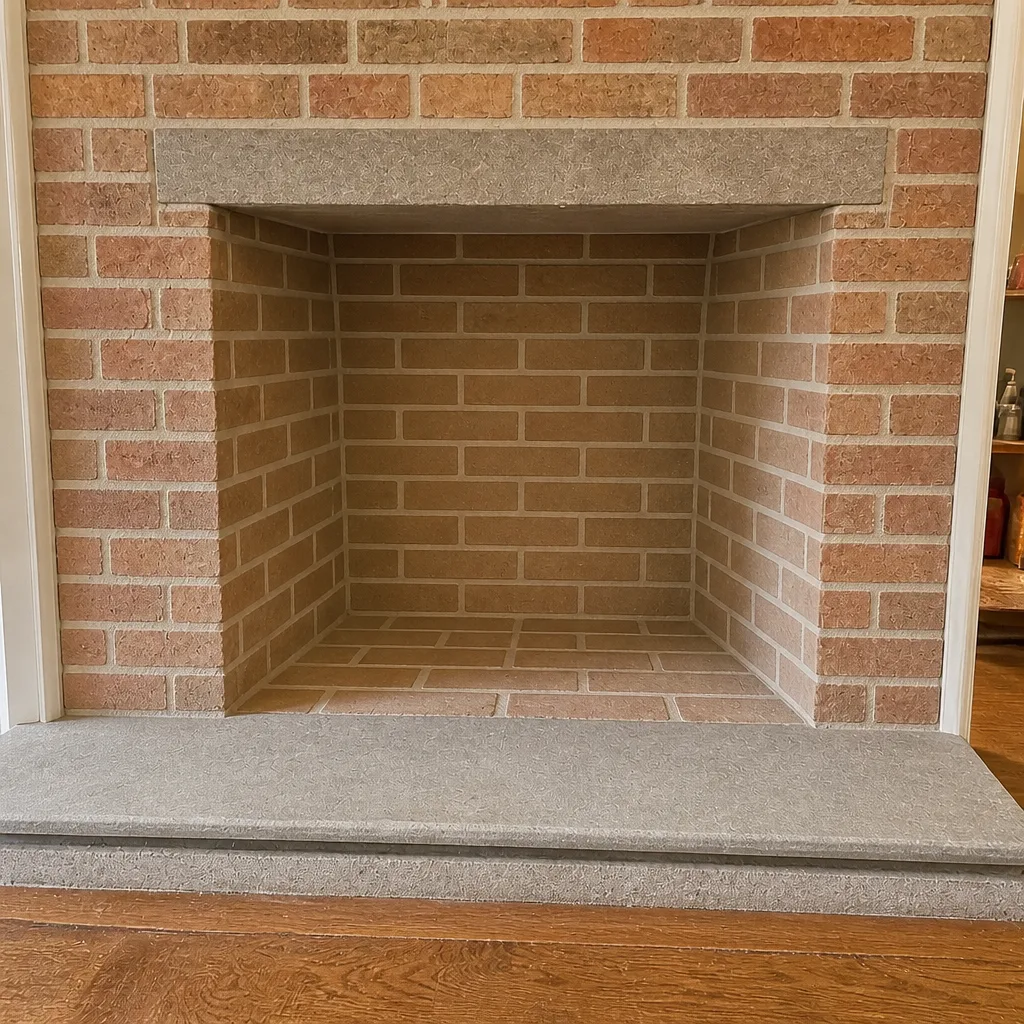
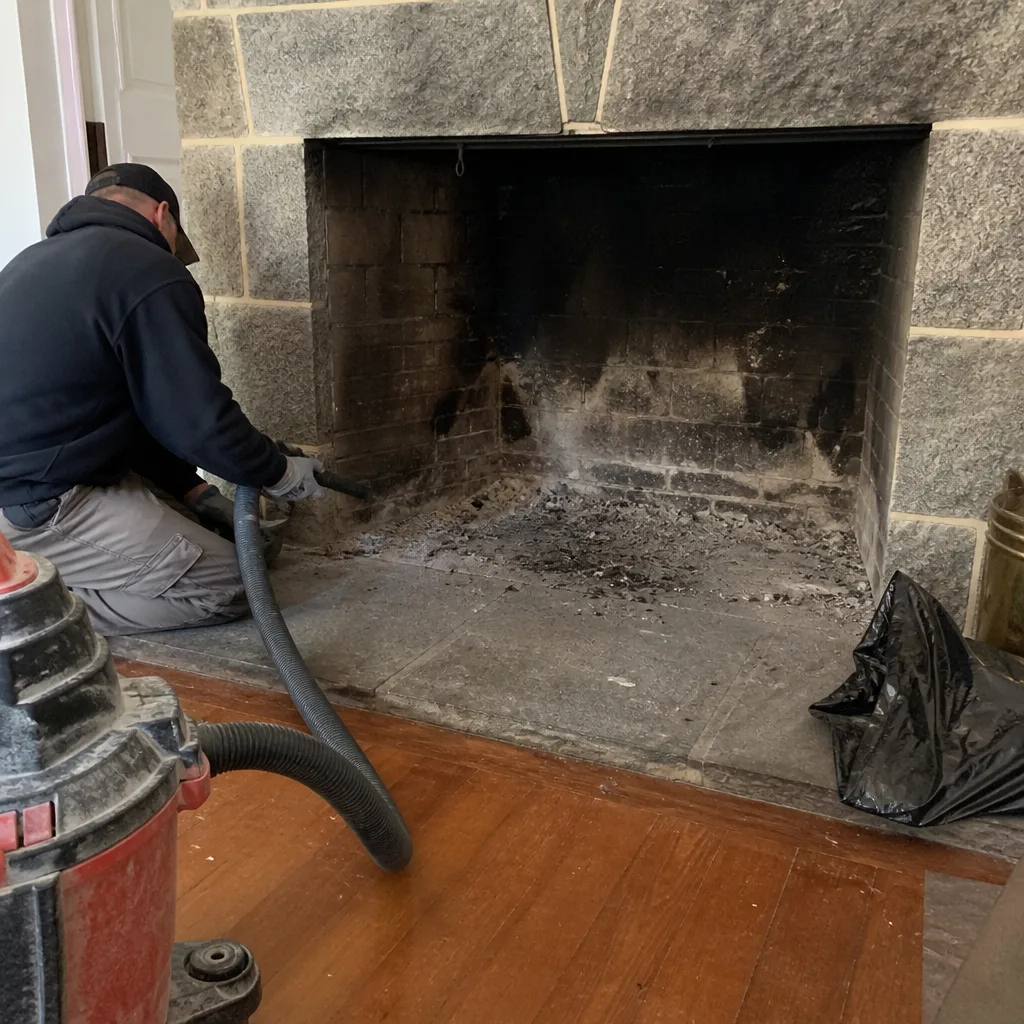
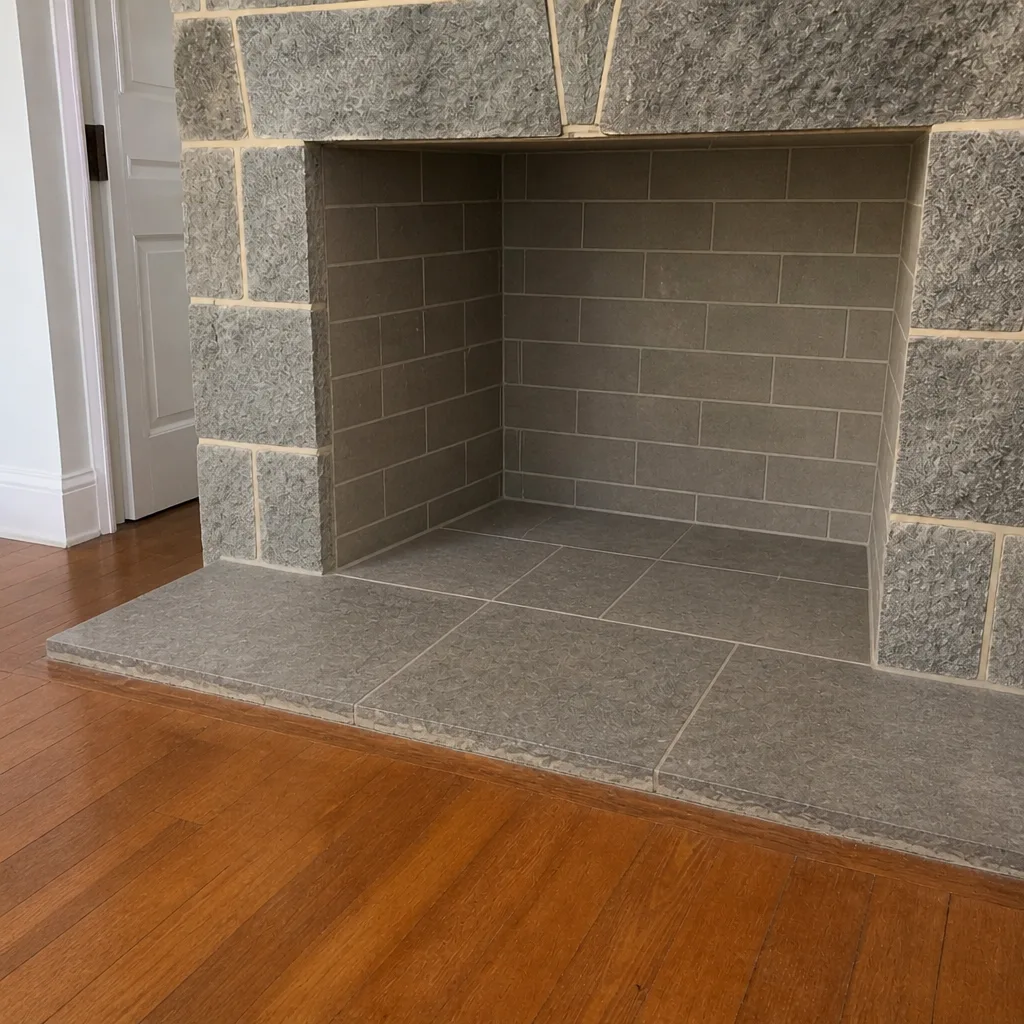
See the difference
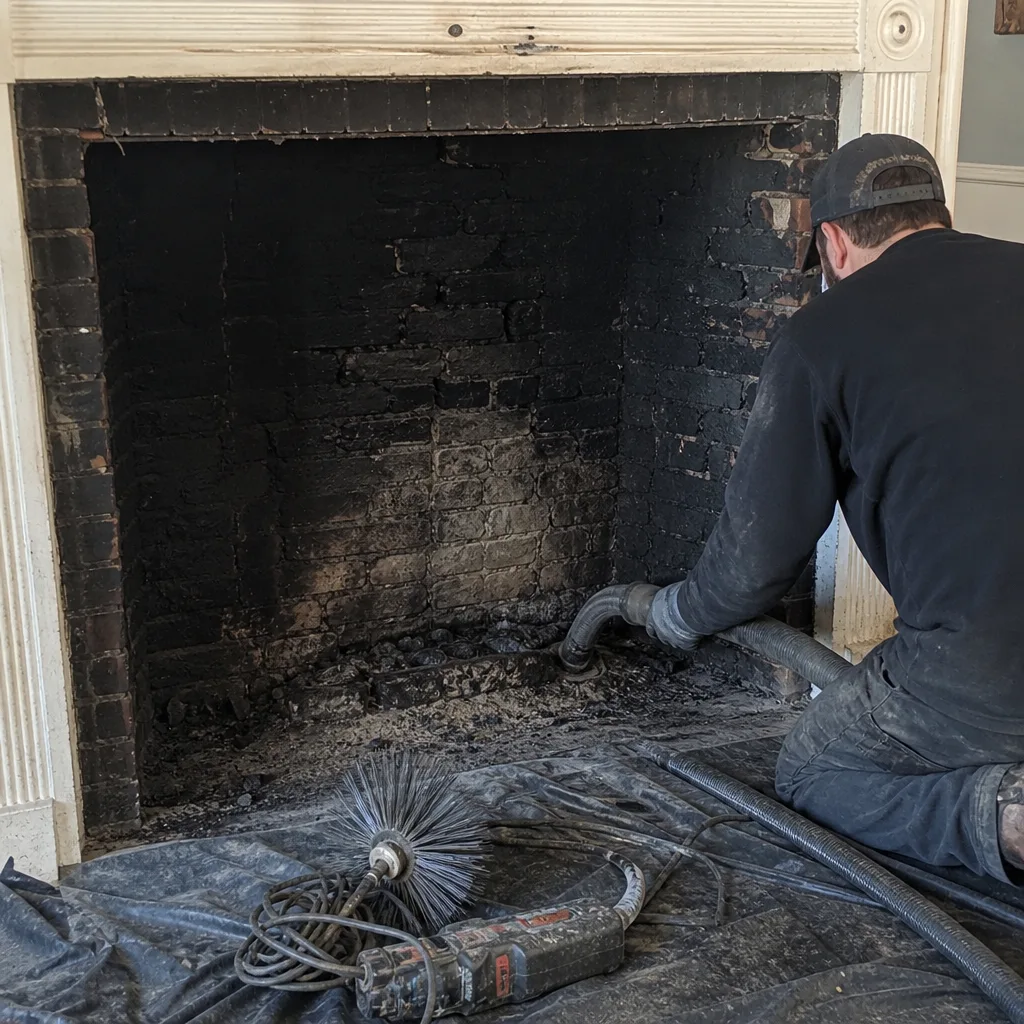 Before
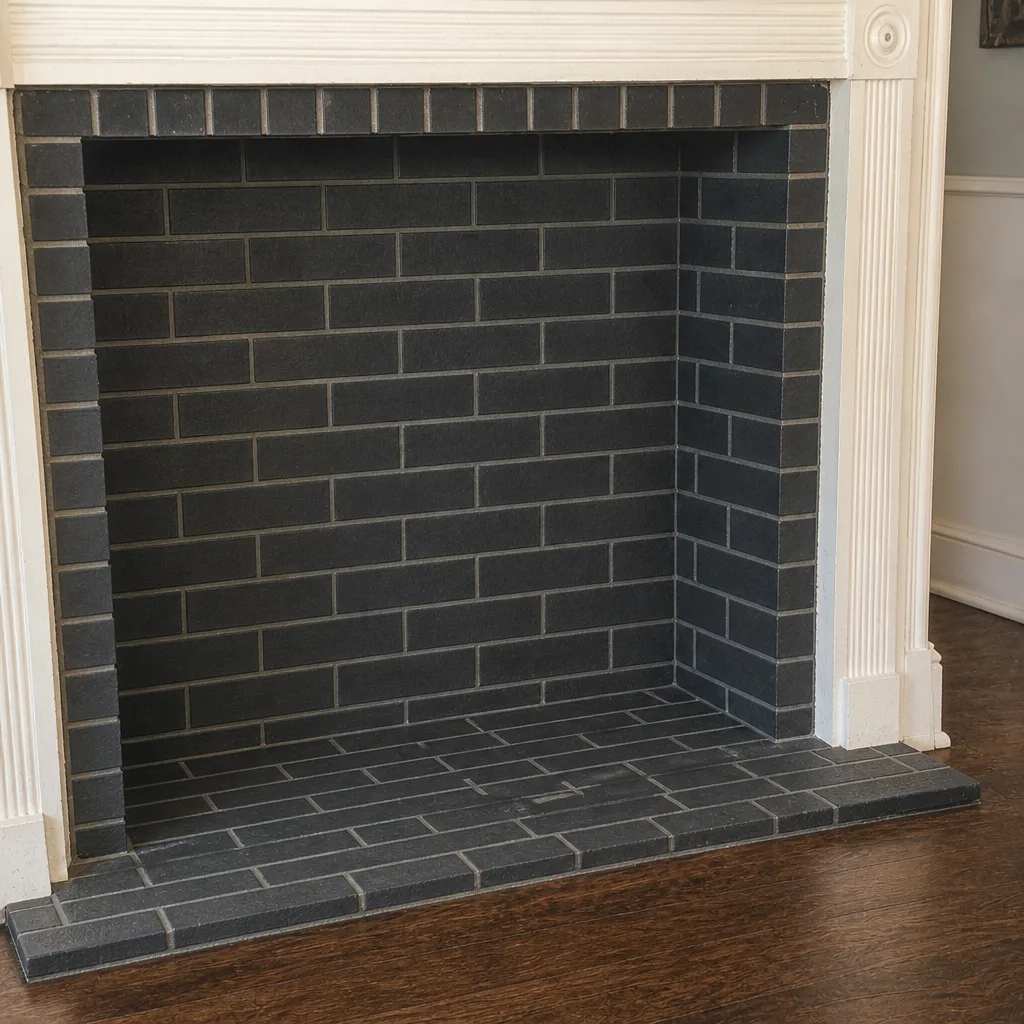 After
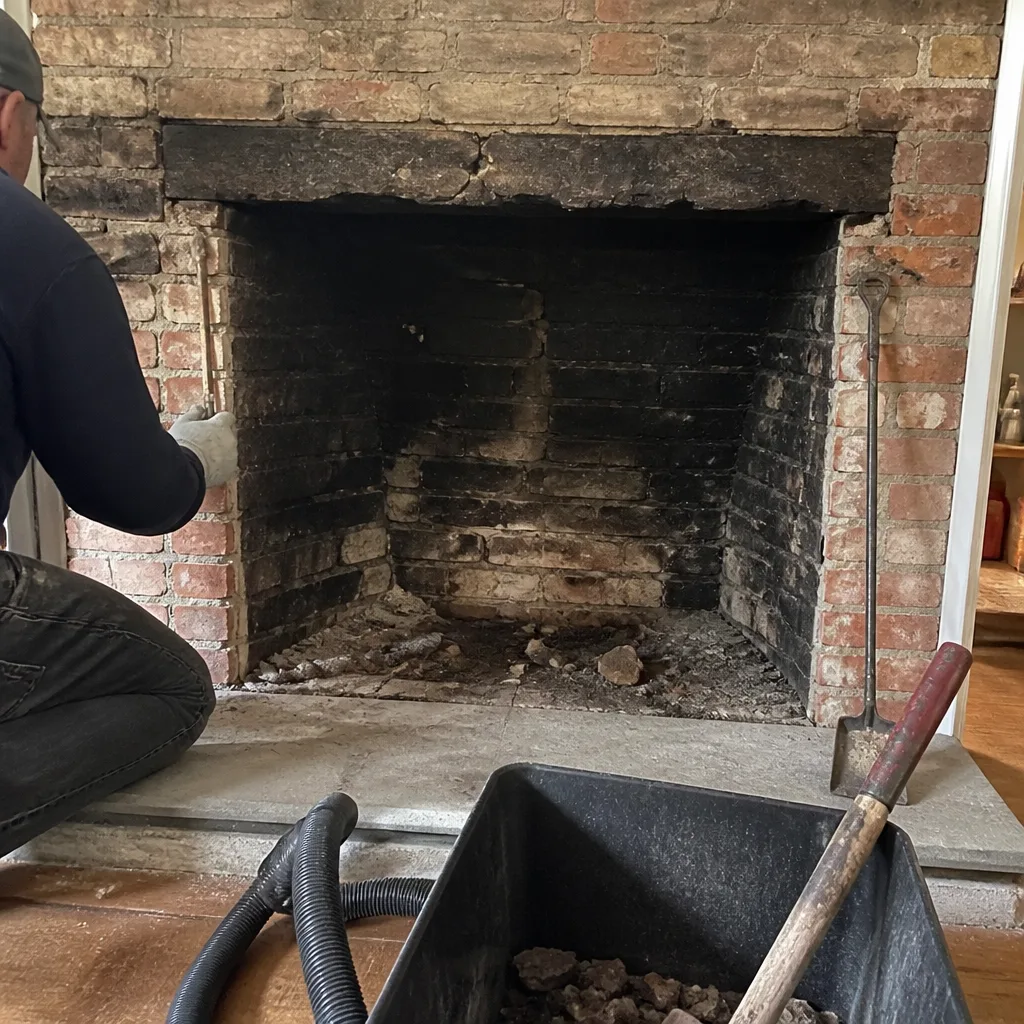 Before
 After
 Before
 After
When to Call a Professional
Most chimney cleaning in Charlestown is annual maintenance, which you book, not panic about. The scenarios that warrant calling a professional today are specific. Strong creosote odor in the house, especially a hot, tarry smell after a fire, means the flue has buildup and should be inspected. Any carbon monoxide alarm in the home near the fireplace goes beyond a maintenance call. Visible cracked or spalling masonry, a cap that’s missing or dislodged, or water staining on the chimney breast all justify a visit. A wood appliance that drafts poorly, smokes into the room, or smells like a campfire when not in use is telling you something’s wrong inside the flue. And any chimney that hasn’t been swept in a few seasons is due, regardless of how it behaves. Chimney Sweep Charlestown offers free estimates in Charlestown. Call (877) 792-6155. We answer 24/7. Fast dispatch from 7am to 7pm, Sunday through Friday.
Frequently Asked Questions
A typical chimney sweep in Charlestown is a modestly priced service, with cost varying by flue length, access, and whether a camera inspection is included. Most estimates fall within the standard range for the Boston metro. The written estimate sets the final price and the estimate itself is free, so there’s no cost to getting the number before booking. Call (877) 792-6155 for an exact quote. Estimates are free.
Yes, for any repair work beyond routine maintenance. Massachusetts requires residential home improvement contractors to hold an active HIC registration with the Office of Consumer Affairs and Business Regulation, and chimney repairs fall within that scope. Verifying takes about five minutes and gives you state-backed recourse if something goes wrong. An unregistered contractor leaves you with no path to a complaint process.
CSIA certification means an individual sweep has passed a proctored exam and carries continuing education requirements. “Trained technician” is an unregulated marketing phrase with no legal meaning. If a company uses the phrase, ask directly whether a CSIA-certified sweep is on the active roster and whether the person doing your work is certified. The certification is the credential; the phrase is not.
Once a year for wood-burning fireplaces is the standard recommendation, and more often if you burn frequently or burn unseasoned wood, which deposits creosote faster. Gas and pellet appliances typically follow the manufacturer’s schedule and still need inspection. In a Charlestown home with an older flue, annual inspection isn’t optional; it’s how you find problems before they become expensive. Call (877) 792-6155 to schedule.
Skipping a sweep lets creosote accumulate, and creosote is flammable. A flue fire can crack the liner, and a cracked liner can let carbon monoxide into the living space. Skipping isn’t a gradual inconvenience; it’s a fire and CO risk that builds silently. A sweep plus inspection is how you close that risk. Call (877) 792-6155 for a free estimate.
Yes, and we do. A repair that’s cosmetic or minor can often wait a season, and we’ll tell you plainly when that’s the case. A repair that’s structural, or that affects the flue’s ability to vent safely, needs to happen before the next burn. The camera inspection and photo report are what separate “wait” from “now.” Call (877) 792-6155 to schedule the inspection.
A camera inspection is part of a proper chimney inspection and is included in the estimate for that service, not added on afterward. Insist on it and ask for the photo report. Without the camera and the photos, the inspection isn’t an inspection, it’s a visual guess. For a free estimate including the inspection scope, call (877) 792-6155.
A specialist sizes the liner from the actual measured internal dimension of your flue, verified by camera. Non-standard dimensions, rectangular flues, and offset runs all get handled by measuring first and specifying the liner to the measurement, not by matching “same size for same size.” DuraFlex flexible liner systems are specified exactly for that kind of work, including offset and undersized flues. Ask the contractor how they size. If they can’t walk you through it, they can’t handle it.
The Bottom Line
Hiring a chimney sweep in Charlestown is a verification exercise, not a shopping one. Confirm CSIA certification, verify HIC registration before any repair work, ask about liner sizing competency and the specific products on the estimate, and demand a camera inspection with a photo report. Reject any quote that arrives lump-sum, vague on materials, or without a written scope. When the inspection turns up something, prefer a contractor who can quote and schedule the repair under the same roof. That combination, credentials, camera evidence, named materials, and one company through the whole job, is the standard the trade should meet. Anything less and the homeowner is doing the contractor’s work.
Chimney Sweep Charlestown covers the full arc of chimney care: sweep and inspection, cap and crown work, fireplace repair, and chimney repair. We answer 24/7. Fast dispatch from 7am to 7pm, Sunday through Friday. Call (877) 792-6155 for a free estimate and a written scope you can actually read.
Written by the team at Chimney Sweep Charlestown.